The Serious Stuff
Dog Safety: What Could Change for Owners Under New Proposals?
Twenty recommendations aim to prevent dog attacks, improve access to reliable training and help authorities intervene before problems become more serious.
By The Muddy Truth Editorial Team
Published · 6 min read
Quick answerA responsible dog ownership taskforce has proposed stronger prevention, better incident records and possible regulation of trainers and professional walkers. The report does not itself introduce new legal duties for owners; ministers are considering its recommendations.
Not veterinary advice. General information only. We don't diagnose or treat. Never try home treatments for health problems. Always speak to a vet about symptoms.
Timeline
2018
A parliamentary committee published recommendations on dangerous dog control following evidence submissions and hearings.
2021
Defra published commissioned Middlesex University research on preventing dog attacks and improving responsible ownership.
2022
The Responsible Dog Ownership taskforce was established to develop recommendations.
2023–2024
Taskforce work paused while Defra implemented the XL Bully ban.
May 2025
The taskforce reconvened to review, update and agree its recommendations.
Could choosing a dog trainer, hiring a walker or reporting an out-of-control dog become more straightforward? Those are among the practical questions raised by a government-convened taskforce calling for a stronger approach to preventing dog attacks. Its recommendations concern everyday ownership across breeds, not just the most serious incidents that reach the headlines.
The Responsible Dog Ownership taskforce has agreed 20 recommendations, ranging from better records of bites to possible legal requirements for professionals caring for dogs. The important distinction for owners is that a recommendation is not a new rule: publication of this report does not itself change your legal obligations.
What the dog ownership proposals would change
The taskforce brings together representatives from policing, local authorities and animal welfare organisations. Convened by Defra in 2022, it considered research from Middlesex University and outstanding recommendations from Parliament’s Environment, Food and Rural Affairs Committee. Its work resumed in May 2025 after a pause during implementation of the XL Bully ban.
Several proposals would require further policy development or legislation. These include exploring new legal requirements for ownership, considering requirements for professional dog walkers and creating a statutory duty for councils to provide a dog control service for lower-level problems. They are not an announced package of compulsory courses or licences for every owner.
Other measures focus on making existing systems work better. Updated guidance and training for enforcement staff are immediate priorities, alongside more consistent data collection and clearer routes to reliable behavioural support. The report also records one recommendation concerning fixed penalty notices as completed, underlining that the proposals are at different stages.
In her ministerial foreword, animal welfare minister Baroness Hayman says ministers are considering the recommendations. Breed-specific legislation was excluded from the taskforce’s remit, so this is not a review of which dog types are prohibited.
What rising dog injury admissions tell us
Hospital admissions in England involving dog bites or strikes increased from 6,097 in 2010–11 to 10,787 in 2024–25, a rise of 77%. These are admissions figures, not a count of every bite, every injured person or every dog involved. The category also includes strikes, rather than bites alone.
For comparison, PDSA estimates put the UK dog population at 11.1 million in 2025, against 8.2 million in 2011: approximately 35% growth. The hospital and ownership figures cover different geographical areas and periods, so they cannot establish a precise change in the risk posed by an individual dog.
There is nevertheless a substantial injury burden to address. The taskforce wants improved recording of wounds and the circumstances surrounding incidents, a statutory recording duty for enforcement authorities, and exploration of a shared dog control database. It also recommends making existing healthcare data more accessible across relevant agencies.
Context matters because a total cannot explain what preceded an injury or which intervention might have prevented it. Research into underlying causes and the effectiveness of prevention measures is therefore part of the recommendations. Better records could help distinguish recurring problems from assumptions about how attacks happen.
Choosing a dog trainer or professional walker
For owners seeking help, one significant recommendation is to explore regulation of dog trainers and behaviourists. Gathering evidence on the available options is an immediate priority. That is a step towards assessing regulation, not confirmation that a new compulsory register has been established.
The taskforce also wants clearer consumer information directing people towards suitable training and behavioural support. In practice, owners should ask prospective trainers about their relevant qualifications, experience, methods and approach when a dog becomes uncomfortable. Reward-based training should build skills without frightening or hurting the dog; promises of a guaranteed rapid solution deserve scrutiny.
Professional walkers are addressed separately, through a recommendation to consider potential legal requirements. Before handing over a lead, ask who will walk your dog, how dogs are grouped, how transport is managed and what happens during an emergency. Explain any known triggers, handling difficulties or history of conflict rather than assuming the walker will discover them safely.
Training is not a substitute for veterinary assessment when behaviour changes suddenly. Pain or illness can affect behaviour. Contact your vet if your dog develops new aggression, seems distressed or shows signs of discomfort; appropriate behavioural support can then be considered alongside veterinary advice.
Preventing dog control problems from escalating
A proposed statutory council duty would focus on lower-level dog control issues, helping address problems before a serious incident. The taskforce also recommends greater use of preventative enforcement approaches, rather than relying solely on action after someone or another animal has been hurt.
This does not mean authorities must wait for new legislation before acting. Existing powers are available, and the report identifies better guidance, staff training and understanding of enforcement barriers as priorities. However, it does not promise identical services or response times in every area.
If a dog presents an immediate danger, call 999. For a non-emergency dangerous-dog concern, contact the police through their non-emergency reporting route. Councils can advise on local dog control problems, including relevant public-space restrictions. Record dates, locations and a factual account when it is safe to do so; do not approach a dog to obtain evidence.
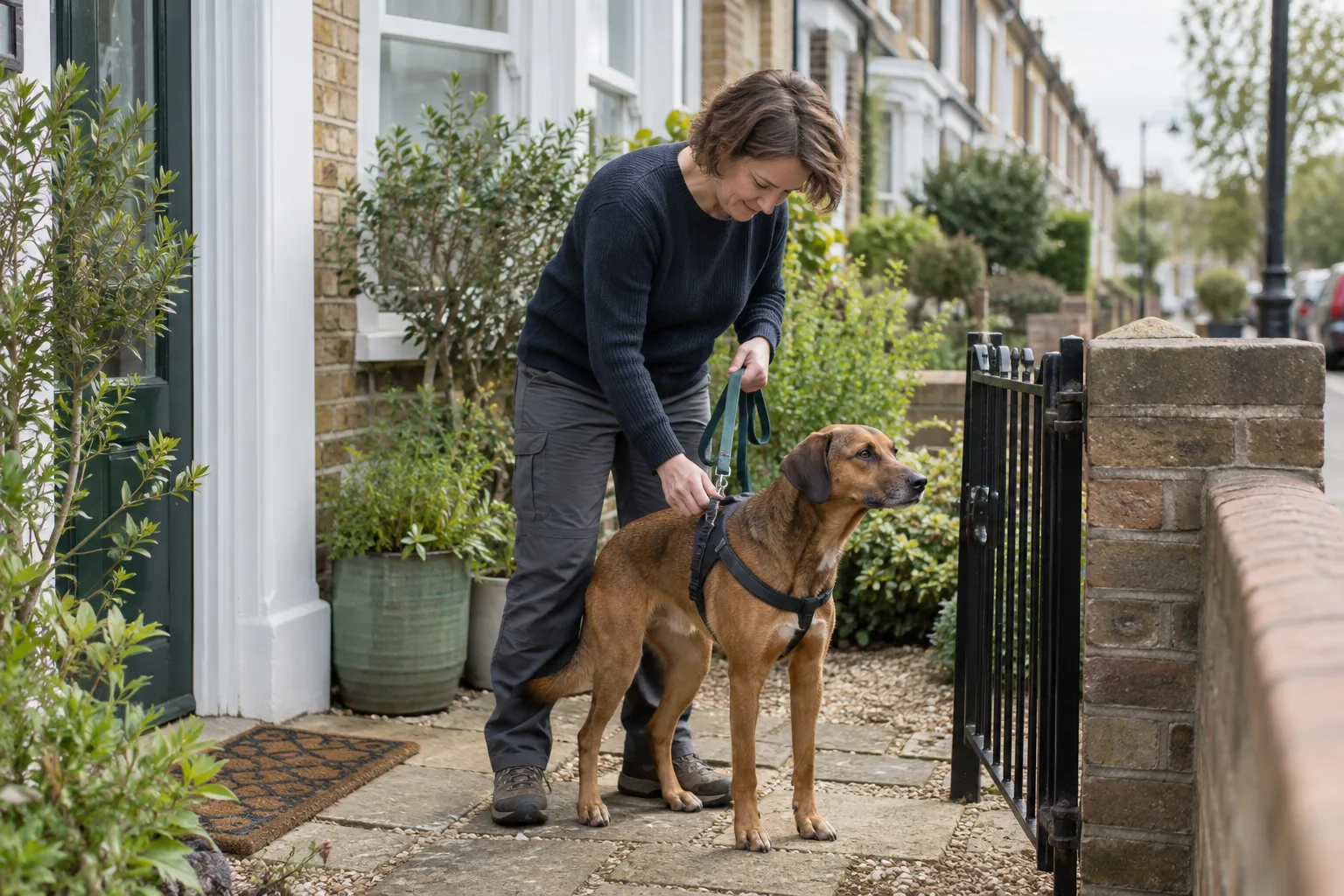
Owners can reduce opportunities for conflict by checking gates, using secure walking equipment and preventing unwanted approaches to people or other dogs. A friendly intention does not guarantee a safe interaction. If your dog has injured another animal, prevent further contact and ensure the injured animal’s keeper knows promptly. A dog with a bite injury needs veterinary advice.
Making children’s interactions with dogs safer
The report calls for a childhood education plan, targeted awareness campaigns for adults and a central collection of educational resources. Crucially, it also recommends research into whether existing education programmes produce lasting changes in behaviour. Delivering a safety message and demonstrating that it prevents harm are different things.
Established RSPCA guidance is that children should never be left alone with a dog, including their own family pet. Supervision needs an adult who is paying attention and can intervene. When that is not possible, use secure separation so the child and dog cannot reach one another.
Give dogs space while they eat, sleep or care for puppies. Children should not climb on dogs, pull at them or put their faces close to a dog’s face. A quiet resting place is useful only if everyone respects it and lets the dog withdraw without being followed.
Watch for attempts to move away, a stiffened body or growling, and end the interaction calmly. Do not punish a warning or force continued contact. No checklist can guarantee a dog will not bite, and responsibility for arranging safe contact belongs to adults, not children.
What owners should watch for next
The next meaningful developments will be government decisions, implementation plans and any specific legal proposals—not the existence of the recommendations alone. The taskforce wants to continue coordinating delivery and monitoring progress with Defra and Welsh Government colleagues, while collaborating with Scotland and Northern Ireland where possible.
That distinction matters for UK readers: dog control law and administrative arrangements are not identical across the four nations. Check the requirements applying where you live and walk your dog, rather than assuming an announcement or exemption process applies everywhere.
For now, review the arrangements already within your control: who handles your dog, how visitors and children are introduced, and where you would seek help. Keep emergency veterinary contact details accessible to anyone caring for the dog. Clear instructions make it easier for another person to act safely when you are not there.
Related: Banned Dogs and Children: What Safe Supervision Must Mean
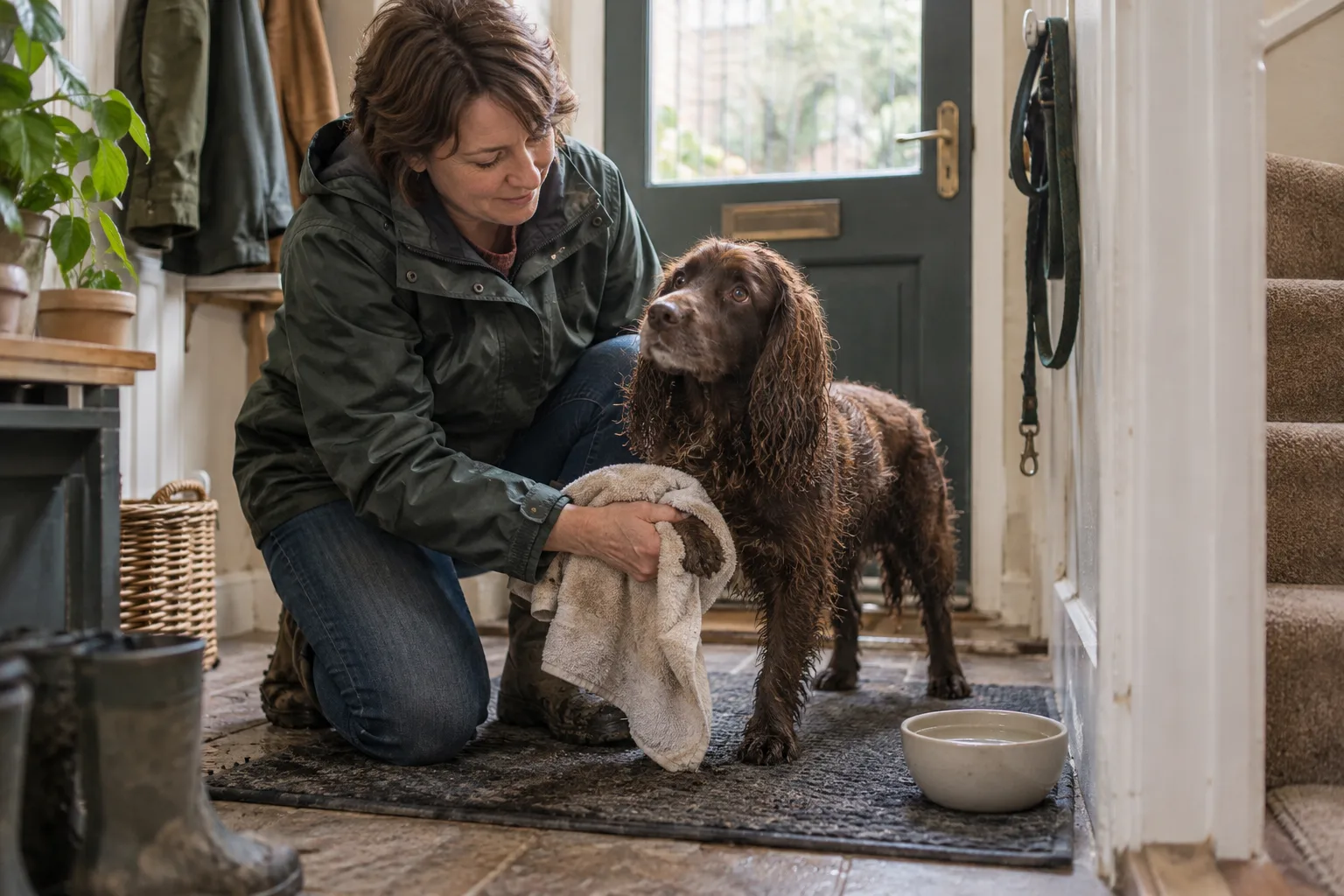
Related: Wet Dog Walks: Keep the Mud Outside, Not on the Sofa
Why this matters
Preventing dog attacks depends on more than expecting owners to cope alone: accessible help, reliable information and effective local enforcement all matter. These proposals could improve that support, but there is no reason to postpone a safety review at home. Agree handling rules with everyone who cares for your dog, provide secure separation when needed and seek qualified help for concerns. Contact a vet about sudden behaviour changes, pain or injury; in a veterinary emergency, call your vet or an out-of-hours emergency vet straight away.
Common questions
- does the responsible dog ownership report introduce new laws?
- The report does not itself introduce new legal duties for owners. It sets out recommendations, some requiring further investigation or legislation, which ministers are considering.
- will dog trainers have to be regulated?
- Regulation is being proposed for investigation, not announced as a new requirement. The taskforce recommends gathering evidence on options for regulating dog trainers and behaviourists.
- are new rules being proposed for dog walkers?
- Yes, the taskforce recommends considering potential legal requirements for professional dog walkers. It does not establish a new licensing scheme through this report.
- how much have dog bite hospital admissions increased?
- Hospital admissions in England involving dog bites or strikes rose 77%, from 6,097 in 2010–11 to 10,787 in 2024–25. These figures include strikes and do not count every bite.
- does the report review banned dog breeds?
- No, breed-specific legislation was outside the taskforce’s remit. Its recommendations address responsible ownership, training, education, data and enforcement across breeds.
- can I leave my child alone with our family dog?
- No, children should never be left alone with a dog, including a familiar family pet. An adult must actively supervise; when that is not possible, arrange secure separation.
- who do I report a dangerous dog to?
- Call 999 if a dog presents an immediate danger. For a non-emergency dangerous-dog concern, use the police’s non-emergency reporting route. Councils can advise on local dog control issues.
- should I call a vet if my dog suddenly becomes aggressive?
- Yes, contact your vet about sudden aggression or other new behaviour changes. Pain or illness can affect behaviour, and training should not replace veterinary assessment.
Sources
This article was written by The Muddy Truth using the sources listed above. Last updated 9 October 2026. It does not name or recommend brands; sponsorship appears only in clearly labelled panels.