Mud, Glorious Mud
Wet Dog Walks: Keep the Mud Outside, Not on the Sofa
A practical wet-weather routine for cleaner paws, safer routes and a hallway that doesn’t look like a bridleway.
By The Muddy Truth Editorial Team
Published · 5 min read
Quick answerMake wet dog walks easier by choosing a safe route and preparing a washable mat and towel before leaving. Afterwards, rinse muddy paws with clean water, check for debris and dry your dog’s feet, legs and underside thoroughly.
Not veterinary advice. General information only. We don't diagnose or treat. Never try home treatments for health problems. Always speak to a vet about symptoms.
The walk lasted half an hour. The evidence now stretches from the back door to the sofa. Wet dog walks have a habit of becoming household events, particularly when your dog regards being towelled as an optional extra.
Keeping the mess manageable doesn’t require a cupboard full of equipment. It needs a sensible route, a small landing zone by the door and a return-home routine your dog can tolerate. The aim is not a spotless dog after every outing; it is a comfortable dog and considerably less countryside indoors.
Set up a muddy-paw landing zone
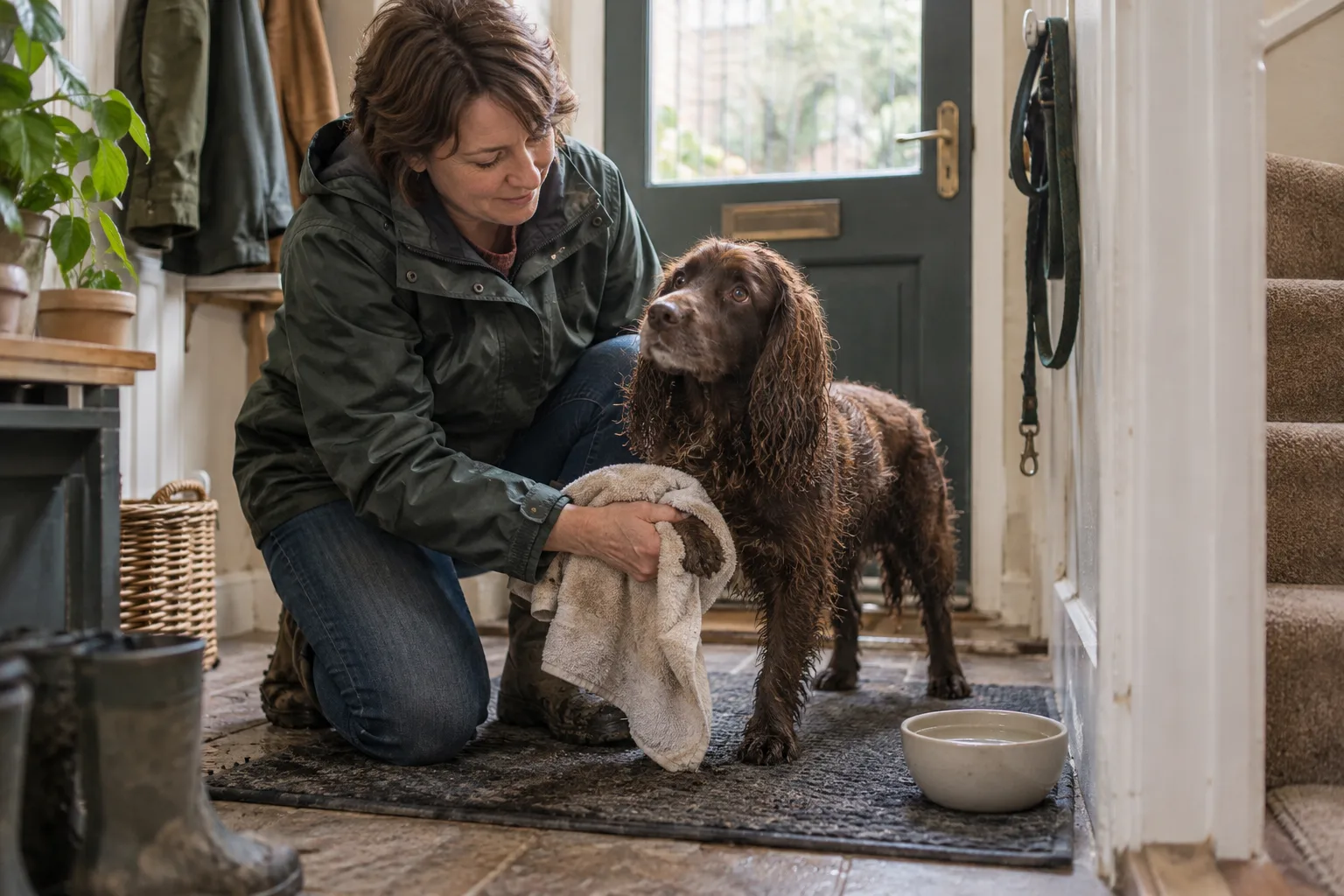
Start with the bit that happens last: getting back inside. Put a washable, non-slip mat where your dog enters, with a towel within reach rather than in the airing cupboard upstairs. Leave enough clear space for your dog to stand without slipping or squeezing past bags and boots.
If you normally arrive through a carpeted hallway, decide where the cleaning will happen before setting off. A suitable washable floor covering can protect the route, provided it lies securely and doesn’t slide or bunch up. An unstable towel spread across tiles is not a substitute for a non-slip surface.
Keep a bowl or jug available for fresh, comfortably lukewarm water on your return. Plain water is a sensible first step for ordinary mud; there is no need to shampoo the whole dog because four feet have visited a puddle. Household cleaners should never be used on paws or coats.
Practise standing on the mat during dry weather, rewarding a brief, calm pause. Introduce touching a leg or lifting a paw gradually, rather than making the first lesson a lengthy clean-up after a soaking. Avoid restraining your dog forcibly; stop if handling causes distress, and contact your vet if there are signs of pain.
Choose wet-weather routes before leaving home
A familiar field path is not necessarily the best choice after prolonged rain. Look for a route with firmer footing, useful lighting and somewhere to turn back. A shorter paved loop can be more practical than committing to a muddy circuit with no convenient exit.
Check the forecast and local warnings before leaving, especially if your usual walk passes a river, stream or low-lying ground. Keep dogs away from fast-flowing water and unstable banks. Do not enter floodwater or let your dog wade through it: depth, currents, hidden damage and contamination cannot reliably be judged from the surface.
For dusk or darkness, check that reflective equipment is clean and any visibility lights work. A torch also helps you see the ground and pick up after your dog. Reflective materials need an external light source to show up; they do not make an unlit route equivalent to a pavement in daylight.
Keep your dog on a lead beside roads and wherever poor visibility or uncertain footing makes close control necessary. If a normally confident dog becomes hesitant in the dark, allow space and choose an easier route rather than pulling them towards something worrying. Contact your vet about a sudden or persistent change in behaviour.
Pick dog coats for fit, not fashion
A waterproof dog coat can reduce how much of the body gets soaked, but it won’t keep every leg and paw clean. Think of it as help with the drying, not a force field against the recreation ground. Coverage varies, so check what it actually protects.
Not every dog needs clothing. Fine-coated dogs and those that feel the cold readily may benefit from protection in cold, wet conditions; age, size, health and the individual dog’s comfort also matter. Ask your vet for advice if you are unsure about an older dog or one with a health condition.
Check the fit while your dog walks, turns and sits, not only while standing still. The coat should allow normal movement and toileting without rubbing around the chest, neck or legs. Make sure your lead attaches securely to the intended collar or harness point, rather than an unsuitable clothing fastening.
Introduce unfamiliar clothing gradually and do not force a dog to wear something that causes distress. Remove the coat when you get home, check underneath for dampness and hang it up to dry according to its care instructions. A wet coat left on indoors keeps damp fabric against the dog and prevents you checking the covered areas properly.
Clean muddy paws, then dry the rest
Work on one area at a time rather than rubbing mud indiscriminately through the coat. Rinse heavily muddied paws with clean, comfortably lukewarm water, including the spaces between the toes. Pour gently or use a gentle flow, keeping the process brief and stopping if your dog becomes distressed.
Once you can see the feet clearly, look between the pads and toes for grit, small stones, thorns or other debris. Check for cuts, redness and swelling too. Do not dig into the skin or try to remove an embedded object; contact your vet for advice.
Limping, persistent paw licking, bleeding or pain during handling also warrant veterinary advice. Cleaning cannot establish whether an injury is minor. If your dog cannot bear weight, has a deep wound or has heavy bleeding, call your vet or out-of-hours emergency vet straight away.
For routine drying, gently press and blot with a towel, paying attention to feet, lower legs, the belly and any longer hair holding water. Vigorous rubbing can tangle longer coats. Replace a saturated towel rather than continuing to push the same water around, and avoid pulling at muddy knots.
Let your dog finish drying somewhere warm and comfortable, away from draughts. Do not leave them unattended beside a heater or use direct high heat. If the coat regularly takes a long time to dry or becomes difficult to maintain, ask a qualified groomer about an appropriate routine for that coat type.
Stop wet towels becoming tomorrow’s problem
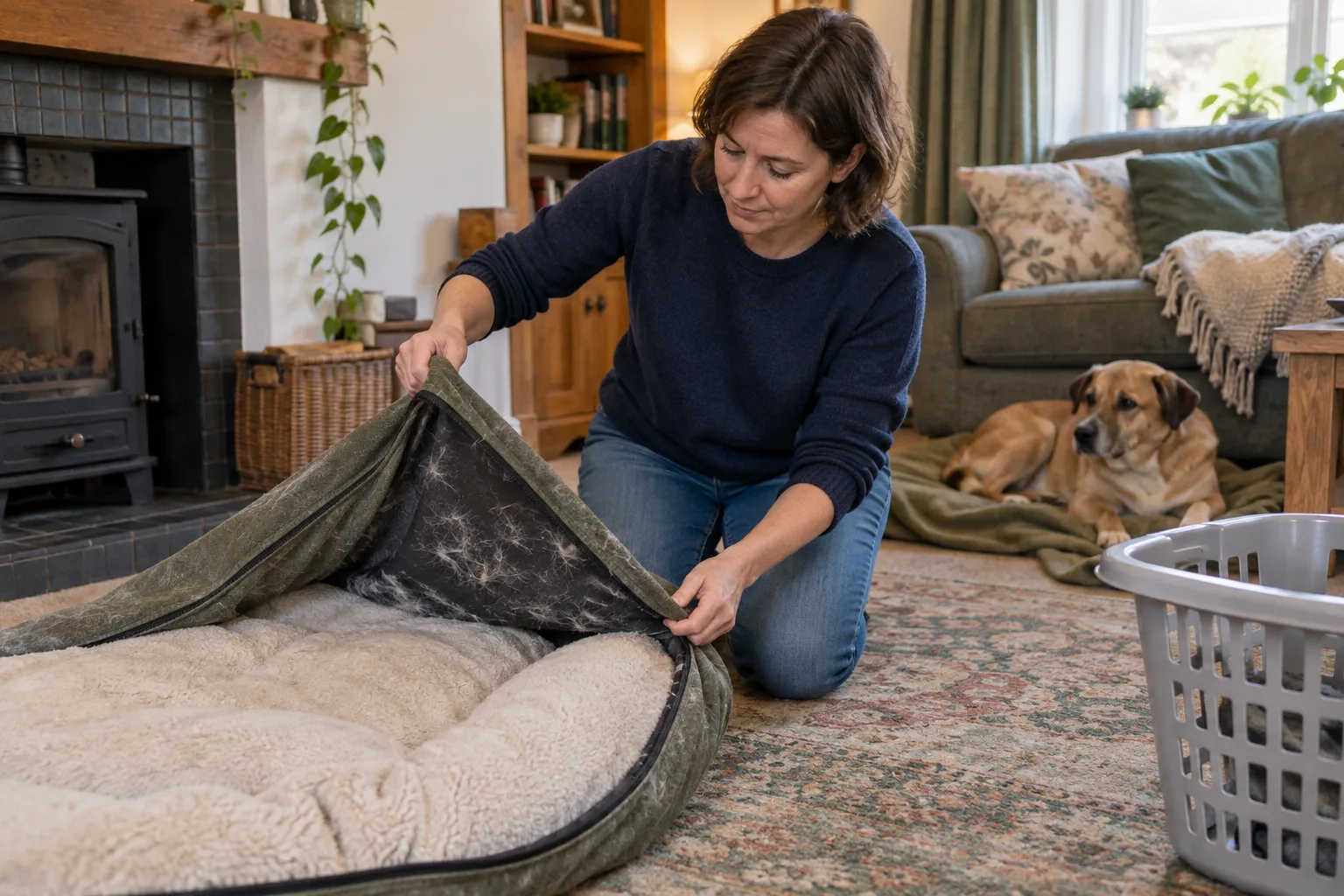
The dog may be finished with the towel, but the towel is not finished with your house. Shake loose dried mud outside before washing, and remove as much hair as practical so it does not all go into the machine. Follow the care label for the towel, mat or washable cover.
Avoid packing the drum tightly: laundry needs room to move. Measure detergent according to its instructions and the load, rather than adding extra because the contents look particularly agricultural. Dry everything fully before storing it, and hang used towels separately while they wait for washing rather than leaving a damp heap.
Wipe muddy floor marks promptly with a method suitable for the surface. Keep your dog away while using cleaning products, follow label instructions and allow the area to dry before access. Fragrance is not a replacement for removing dirt, and adding essential oils is unnecessary.
Finally, adjust the walk itself if your dog dislikes the rain. Allow sniffing time and consider a shorter outing with indoor play or reward-based training afterwards, while meeting their individual exercise and toileting needs. A familiar search game using part of their usual food allowance can add interest indoors without another expedition through the mud.
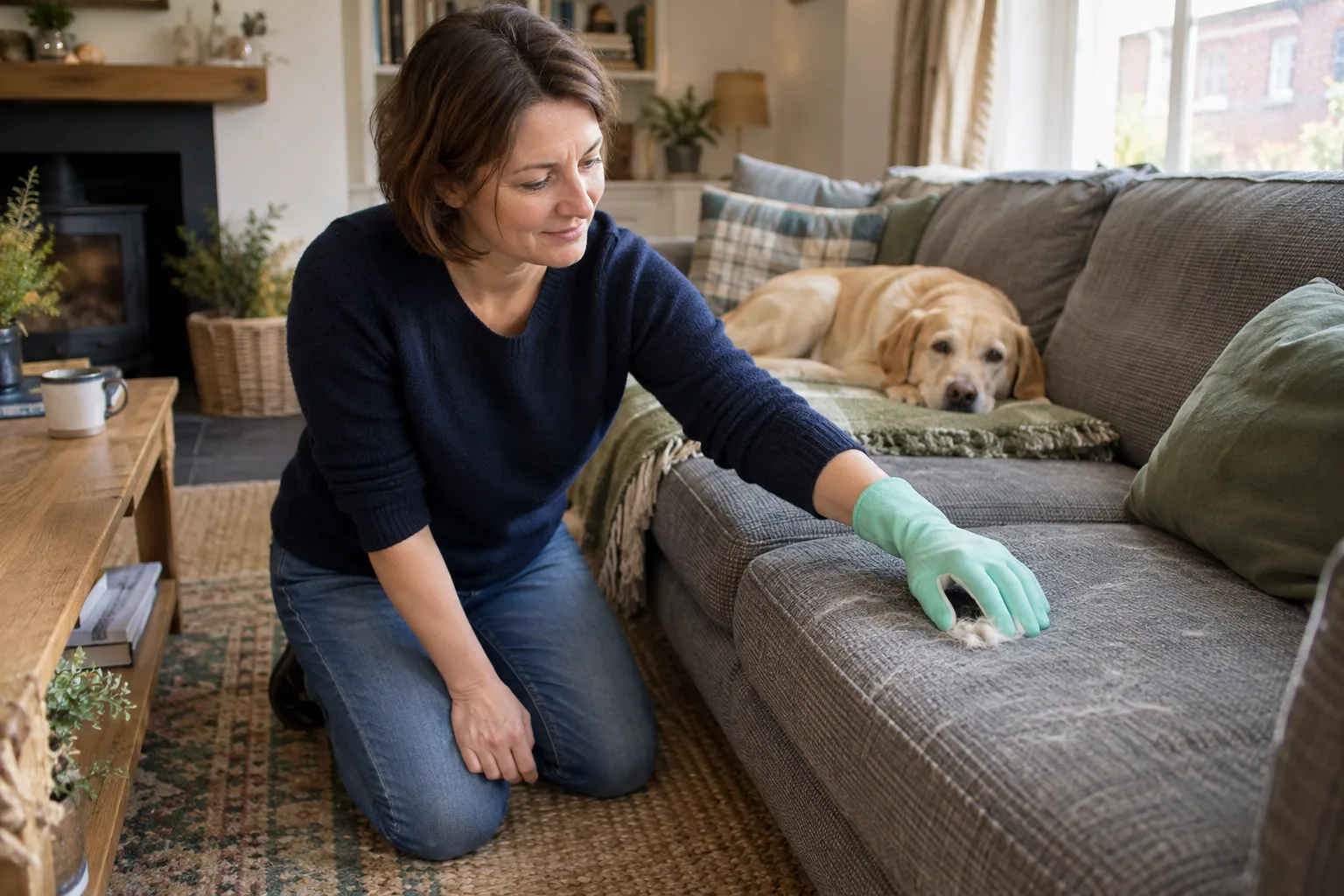
Related: How to Remove Dog Hair Before Your Sofa Grows a Coat
Related: Your House Smells of Dog. The Sofa Is Keeping Evidence.
Why this matters
For UK households without a utility room or outside tap, the useful change is a repeatable routine rather than more equipment. Clear a safe place to stop, have clean water and a dry towel ready, and choose a route you can shorten if conditions deteriorate. That makes the return home easier while leaving time to check paws properly. Mud is a cleaning job; limping, pain or damaged skin need veterinary advice, not a more determined session with the towel.
Common questions
- How do I clean muddy dog paws after a walk?
- Rinse ordinary mud away with clean, comfortably lukewarm water, then gently towel dry. Check between the pads and toes for debris, cuts or redness. Stop if handling causes pain and contact your vet.
- Does my dog need a bath after every muddy walk?
- A full bath is not usually necessary for mud limited to paws and legs. Rinse the dirty areas with plain water and dry them carefully, including longer hair and the underside.
- Does my dog need a waterproof coat?
- Not every dog needs one. Fine-coated dogs and those that feel the cold readily may benefit in cold, wet weather. Fit should allow normal movement and toileting without rubbing.
- Is it safe to walk my dog through floodwater?
- No: avoid entering floodwater or letting your dog wade through it. It can conceal strong currents, damaged surfaces and contamination. Choose an alternative route away from flooded ground and unstable banks.
- How can I make my dog more visible on dark walks?
- Use clean reflective equipment or working visibility lights, and carry a torch to see the ground. Reflective materials need an external light source. Keep your dog on a lead beside roads.
- How should I wash muddy dog towels?
- Remove loose dried mud and as much hair as practical before washing. Follow the care label, avoid overfilling the drum and measure detergent according to its instructions. Dry towels fully before storing.
- What can I do if my dog hates walking in rain?
- Try a shorter, familiar route with time to sniff, then add indoor play or reward-based training. Meet your dog’s individual exercise and toileting needs, and contact your vet about sudden or persistent behaviour changes.
Sources
This article was written by The Muddy Truth using the sources listed above. Last updated 9 October 2026. It does not name or recommend brands; sponsorship appears only in clearly labelled panels.