The Serious Stuff
Banned Dogs and Children: What Safe Supervision Must Mean
New guidance sets out adult supervision requirements for banned breed dogs around children, including how to prevent contact when attention has to shift elsewhere.
By The Muddy Truth Editorial Team
Published · 5 min read
Quick answerFrom 1 November 2026, the new requirement says children under 12 must not have unsupervised close contact with banned breed dogs in private places. An adult aged at least 18 must be physically present, attentive and able to separate them immediately.
Not veterinary advice. General information only. We don't diagnose or treat. Never try home treatments for health problems. Always speak to a vet about symptoms.
Being at home with a child and a dog is not the same as supervising their interaction. The practical test is whether an adult is close enough, paying attention and ready to separate them immediately—not simply somewhere in the house.
Guidance from the Department for Environment, Food & Rural Affairs (Defra) sets out a requirement taking effect on 1 November 2026: children under 12 must not be left in close contact with banned breed dogs in private places without appropriate adult supervision. For households affected, preparing means deciding what happens whenever an adult’s attention moves elsewhere, including during everyday tasks that cannot be avoided.
What adult supervision requires around banned dogs
The supervising adult must be aged 18 or over, remain nearby and observe both the child and the dog. They need to notice how the interaction is developing and be able to act immediately if separation becomes necessary. Having an adult in an adjoining room does not, by itself, meet that description.
Technology cannot fill the gap. A camera might show what is happening, but watching a screen is not the same as being physically present and able to intervene. Defra explicitly excludes baby monitors, video doorbells and other devices as substitutes for in-person supervision.
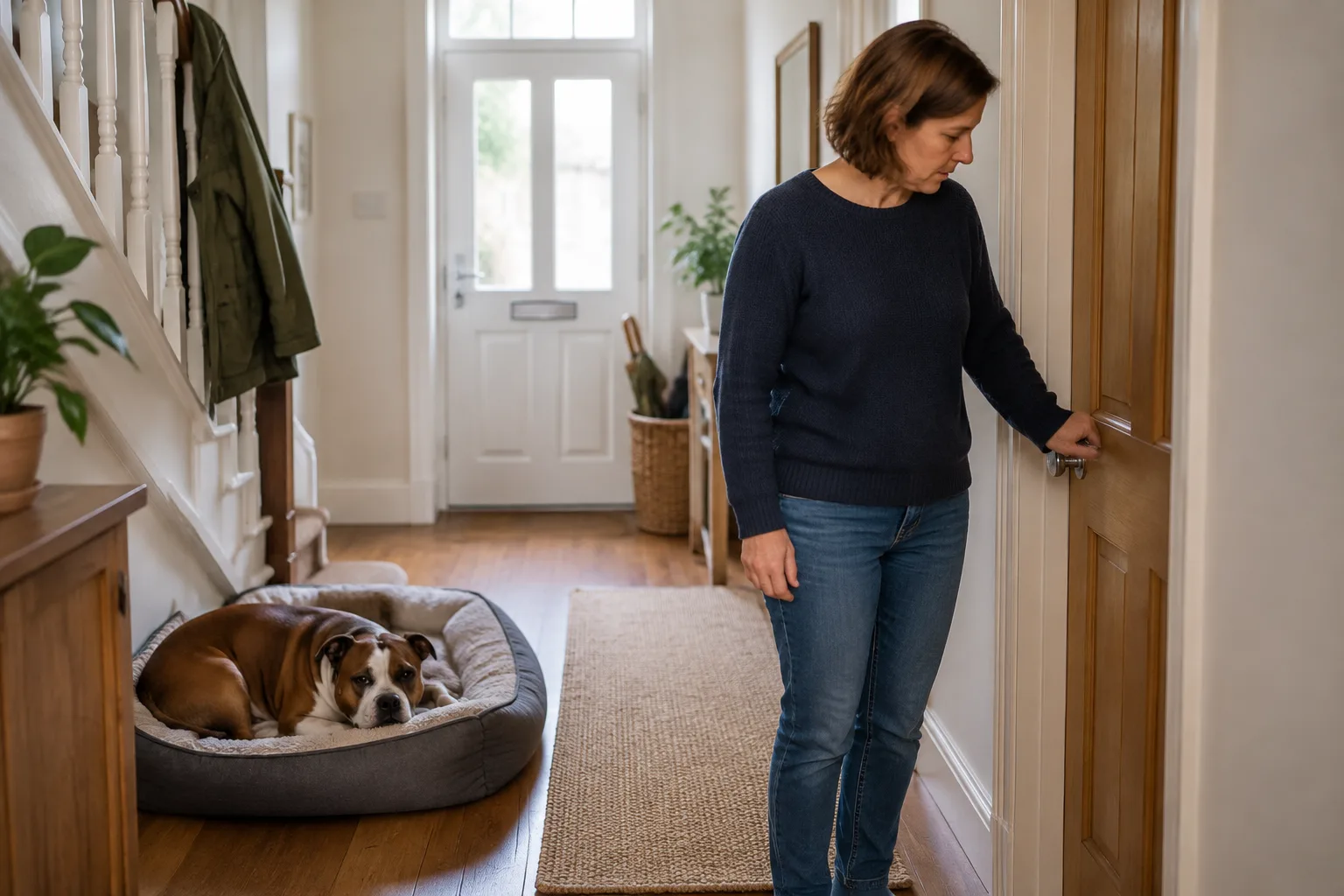
The difficult moments are often ordinary ones: answering the door, helping another child or stepping into the bathroom. Plan separation before starting a task that will prevent close observation. Do not wait until attention is already divided to work out where the dog or child can go.
Where two adults are sharing care, make the handover explicit. One person assuming the other is watching creates a gap neither intended. An older child who is still under 18 cannot fulfil the adult supervision role described in the guidance, even if they regularly help with the dog.
Choosing barriers that actually prevent contact
A useful starting point is the route between the child and the dog. Walk through the home and identify where a securely closed door could keep them apart, where a gate might work and where people moving between rooms could accidentally reopen access.
A barrier must stop physical contact, not merely prevent the dog walking into another room. Check whether a child can reach through its openings, lean over it or put a hand around the edge. Also consider whether either the child or dog could get underneath, climb over or push past it.
Securely closed doors, suitable safety gates and separate floors with access blocked are among Defra’s suggested options. The right arrangement depends on the home, the child’s age and needs, and the dog. A gate that works in one household is not automatically suitable in another.
Taking either the child or dog with you when moving around the house is another option, provided it prevents unsupervised contact. Whichever arrangement you choose, tell other household members which doors and barriers must stay closed. A separation plan only works if everyone preserves it.
When dogs need space from children
Young children are at greater risk of dog-related injuries at home, and incidents often involve dogs they know, according to Defra. Familiarity therefore cannot replace supervision. Sudden movements, loud noises and close attention can make some dogs uncomfortable, even during interactions a child intends affectionately.
Protect rest and feeding time. Children should not approach a dog that is sleeping, eating or drinking, and adults should create space around dogs holding toys. A dog trying to move away should be allowed to leave without being followed or cornered.
Watch the whole dog rather than relying on one signal. RSPCA body-language guidance describes how posture and behaviour can indicate worry or discomfort. Turning away, becoming tense or freezing are reasons to end an interaction calmly and give the dog space; a wagging tail alone is not proof that contact is welcome.
Illness, injury and recovery also change what a dog can comfortably tolerate. Contact a vet if your dog appears unwell, is in pain, develops skin problems or shows a sudden behaviour change. Separate children from a dog showing discomfort rather than asking them to test whether it will accept more attention.
Using gardens, crates and pens safely
A garden can provide separation, but being outdoors does not remove the supervision requirement. Children and dogs can use it at different times, or secure fencing can divide it into spaces that prevent contact. Check access through back doors and side gates as part of that arrangement.
Defra notes that preventing escape from an outdoor area is a condition of a certificate of exemption. The boundary therefore needs to serve two purposes: maintaining separation from the child and keeping the dog securely within the permitted space. Neither can be assumed from the other.
Crates and pens need particular care. They are possible temporary separation tools only when safe and suitable, and the dog should already be comfortable using them. Bars do not necessarily prevent contact: children must not be able to reach inside, and the dog must not be accessible through the enclosure.
PDSA and Battersea guidance recommends positive introductions to crates, with an appropriate size and a comfortable resting area. Confinement should not be used as punishment or as a substitute for meeting the dog’s needs. If an enclosure causes distress, choose another safe arrangement and seek veterinary advice.
Planning for visiting children and busy households
The practical question is not just how your dog behaves around children who live with you. Visiting children may not know the household’s boundaries, and their parents may not know the dog’s routines. Agree the supervision and separation arrangements before the visit starts.
Give children clear, age-appropriate instructions: leave the dog’s bed alone, do not approach during meals and let the dog walk away. Those instructions support an adult’s safety plan; they do not transfer responsibility to the child. Younger children cannot be expected to recognise every sign of discomfort or consistently control an impulsive movement.
Choose a separation space where the dog can rest without children approaching the barrier. Think about the child’s position too: a play area beside a crate or gate may allow unwanted contact even though the dog cannot leave its enclosure.
Reassess arrangements when circumstances change. A newly mobile child, a different room layout or a dog recovering from injury can make yesterday’s setup unsuitable. The aim is to identify foreseeable gaps before a visit or busy period, rather than improvise while managing both child and dog.
Understanding the legal scope and wider safety advice
The requirement described by Defra concerns banned breed dogs and children under 12. The guidance also encourages broader use of its safety principles around other dogs, older children and vulnerable adults. That distinction matters: the stated legal scope is narrower than the households that can benefit from safer supervision.
Dog-control law differs across the UK. Check the rules and exemption conditions applying where you live rather than treating one supervision requirement as a complete account of your responsibilities. Our explanation of dog-safety proposals and what could change for owners provides related context on proposed changes, which should be distinguished from requirements already in force.
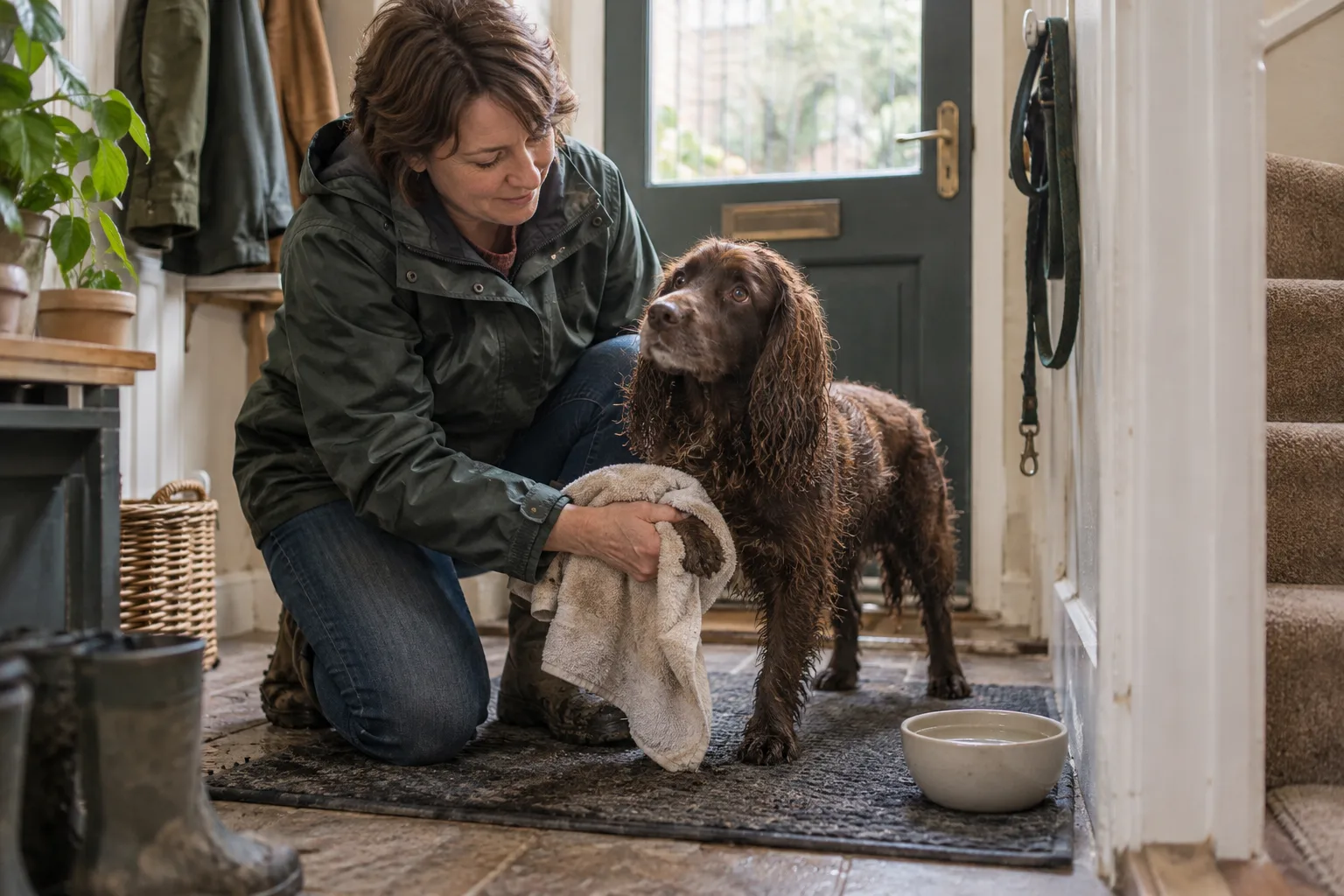
Related: Wet Dog Walks: Keep the Mud Outside, Not on the Sofa
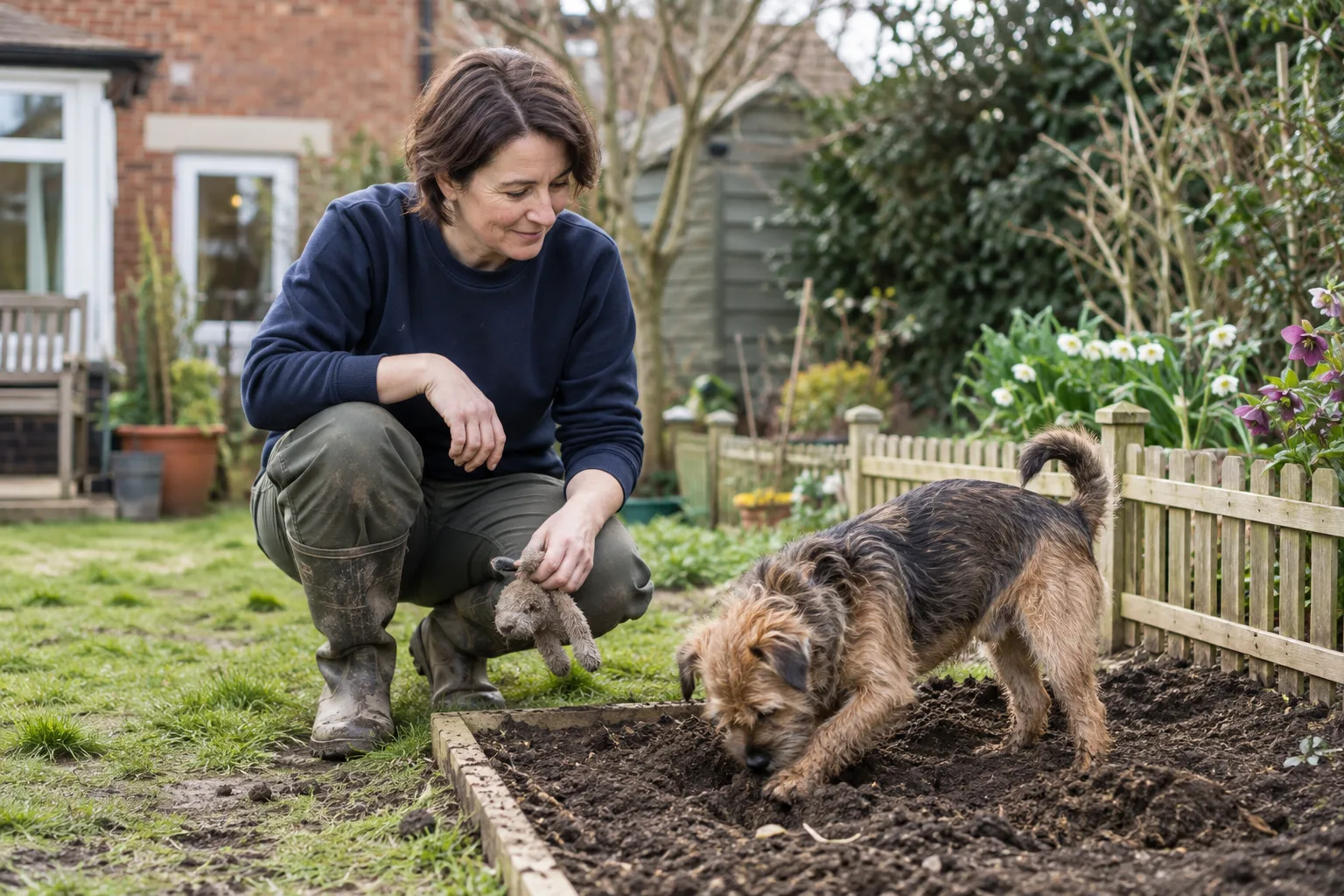
Related: How to Stop Your Dog Digging Up Your Entire Weekend
Why this matters
For UK households, the useful next step is a room-by-room check: who will supervise, where can the dog rest, and what prevents contact when an adult steps away? These are practical safeguards worth reviewing regardless of a dog’s legal classification. Keep checking the requirements that apply where you live, and distinguish confirmed duties from proposed changes to dog-safety rules. If your dog shows pain, illness or a sudden behaviour change, contact your vet and keep children safely separate.
Common questions
- When do the new banned dog supervision rules start?
- The requirement described in the guidance starts on 1 November 2026. It covers children under 12 having close contact with banned breed dogs in private places, including homes and gardens.
- How old do you have to be to supervise a child around a banned dog?
- The supervising adult must be at least 18. They must remain nearby, observe the interaction and be able to separate the child and dog immediately.
- Can I use a baby monitor to watch my child and dog?
- No. A baby monitor, camera or video doorbell cannot replace an adult being physically present and able to intervene.
- Is a stair gate enough to separate a dog and child?
- Only if it securely prevents physical contact. Neither the child nor dog should be able to get over, under, through or around it, and a child must not be able to reach through.
- Do the supervision rules apply in a private garden?
- Yes, the requirement includes private gardens. Without appropriate supervision, children and dogs need separation that prevents contact, such as using the garden at different times or having securely divided areas.
- Can I use a crate to keep my dog away from children?
- A suitable crate can provide temporary separation if the dog is already comfortable using it and it prevents contact. Children must not be able to reach inside or approach and touch the dog through the bars.
- Does the new rule apply to all dogs?
- The stated requirement applies to banned breed dogs and children under 12. The supervision and separation principles are also useful around other dogs, older children and vulnerable adults.
Sources
This article was written by The Muddy Truth using the sources listed above. Last updated 9 October 2026. It does not name or recommend brands; sponsorship appears only in clearly labelled panels.