The Fur Situation
How to Remove Dog Hair Before Your Sofa Grows a Coat
The dog gets the comfy seat. You get the hairy trousers. Here’s how to clear fur from furniture, floors and laundry without making more work.
By The Muddy Truth Editorial Team
Published · 6 min read
Quick answerRemove dog hair from furniture and carpets with a suitable vacuum attachment, using a lint roller or lightly damp rubber glove for stubborn fabric patches. Lift loose hair from washable items before laundering, and brush your dog with a tool suited to their coat.
Not veterinary advice. General information only. We don't diagnose or treat. Never try home treatments for health problems. Always speak to a vet about symptoms.
Dog hair has a particular talent for making clean things look unfinished. The sofa has been vacuumed, the washing is fresh, and yet your black trousers suggest you spent the morning wrestling a Labrador.
The useful distinction is between loose hair, which can be collected, and hair caught in fabric, which needs loosening first. Water alone is not a reliable answer to either. A better routine tackles furniture before floors, removes fur before laundry and gives the dog’s favourite sleeping spot its own washable layer. No replacement sofa required.
Remove dog hair from sofas without damaging fabric
Start with the upholstery care instructions. A method that works on a sturdy woven cover may leave marks or disturb the pile on a delicate fabric. Test any contact method on a hidden area before tackling the seat everyone can see.
Use the vacuum’s upholstery attachment across cushions, backs and arms, then its crevice tool along seams and beneath removable cushions. Work slowly enough for the attachment to collect hair rather than simply skate over it. Vacuum the sofa before the floor, so anything dislodged gets collected afterwards.
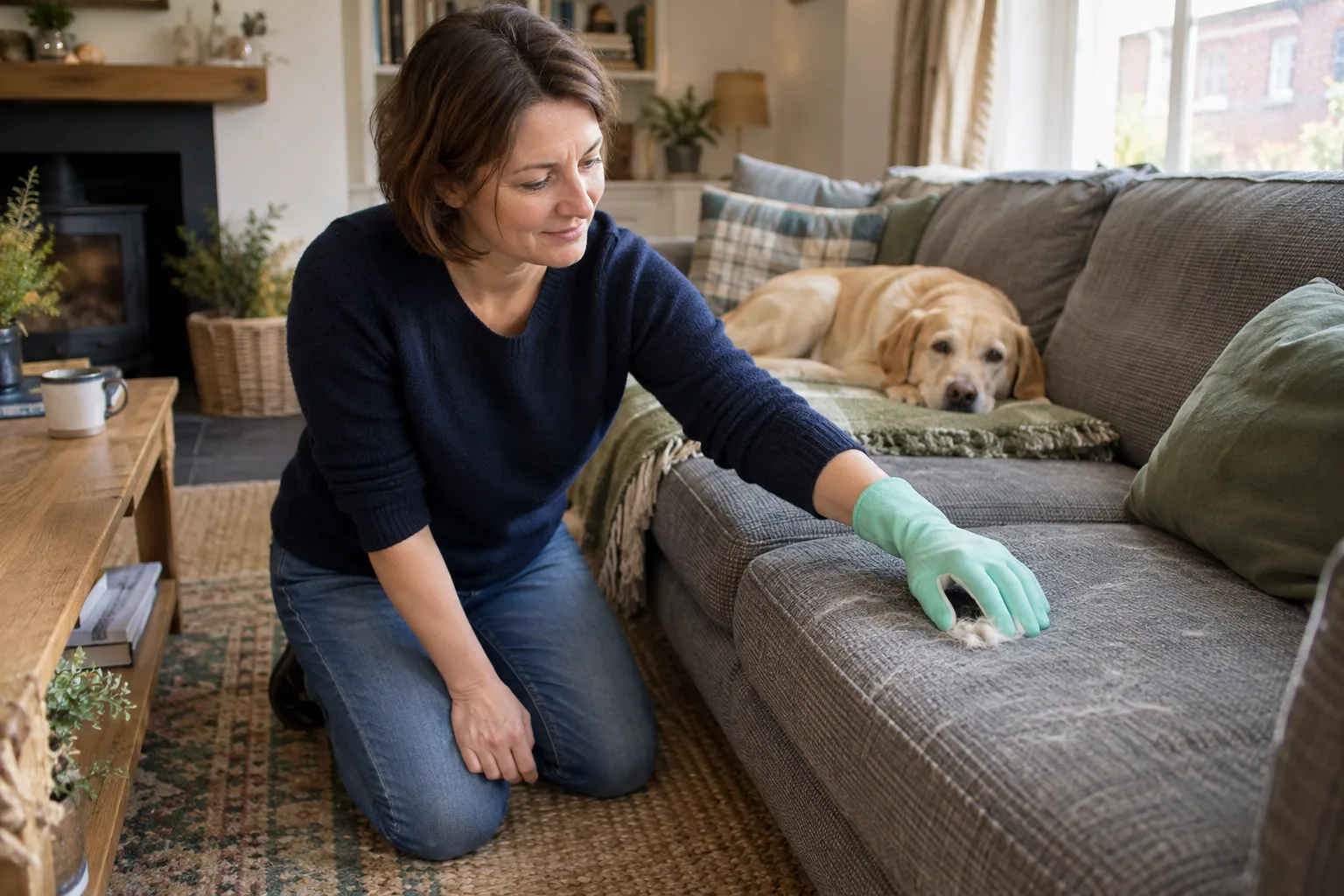
For stubborn patches on suitable fabric, try a clean rubber glove, lightly dampened rather than dripping. Sweep gently in one direction to gather hair into clumps, then pick those up and bin them. The glove’s grip helps move the strands; soaking the cushion adds another job rather than improving this one.
A lint roller is useful for a final pass or a small area. Avoid scrubbing upholstery with stiff brushes, which can roughen fibres. If the same cushion also collects muddy paw prints, a separate post-walk routine for keeping mud off the sofa tackles that mess before it reaches the fabric.
Clear carpets and hard floors in the right order
On carpet, use the vacuum setting and floorhead recommended for that surface. Slow, overlapping passes are more useful than a quick dash through the middle of the room. Where the carpet instructions allow, change direction to approach embedded hair from another angle.
Give edges, stair corners and the space around the dog’s bed their own pass. These are easy to miss with a large floorhead. Check underneath movable furniture too, rather than assuming every drifting tuft will politely remain in view.
Before blaming the vacuum, inspect it. A full container, clogged filter or hair-wrapped brush bar can interfere with cleaning. Switch off and unplug the machine before maintenance, and follow its instructions for removing tangles and cleaning filters. Wash filters only if they are washable, and let them dry as directed before refitting.
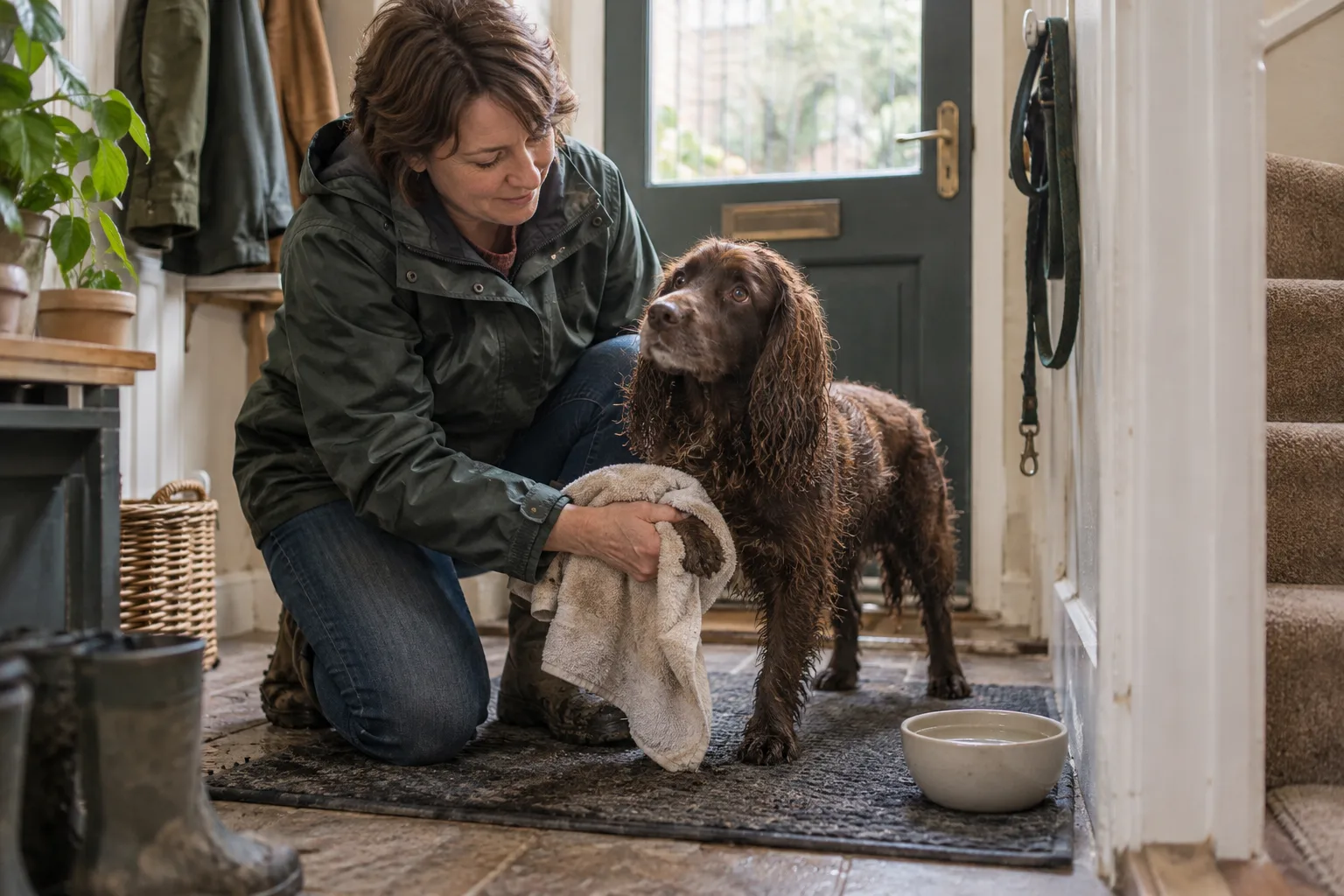
On hard floors, collect loose fur first, then use a lightly damp mop if the floor’s care guidance permits. Avoid leaving standing water. For hair mixed with wet footprints, containing muddy paws at the door reduces the debris being carried further into the house.
Get dog hair off clothes before washing
A lint roller is the straightforward option for trousers, coats and other dry clothing. Lay the fabric flat and support it as you roll, paying attention to hems, sleeves and the areas that have been pressed against upholstery.
For larger washable items, lift loose hair with the vacuum’s appropriate attachment or a suitable fabric brush before loading the washing machine. Empty pockets and remove any remaining clumps by hand. Washing is for cleaning the textile, not disposing of a small supplementary dog.
A tumble dryer can help loosen hair from dry, tumble-safe fabrics on a brief unheated cycle, provided the appliance instructions allow it. This is optional, not a reason to buy a dryer. Check the care label first: an air-only setting does not override a prohibition on tumble drying.
Keep within the dryer’s load limit and clean its lint filter as instructed, including after this hair-removal step. Do not put foam-filled beds, rubber-backed items or anything else prohibited by the manufacturer into the drum.
After washing a hairy load, check the empty drum and door seal for trapped fur and wipe it away. Maintain any user-accessible washing-machine filter according to the manual; do not start opening unfamiliar fittings because an online cleaning shortcut made it look easy.
Make dog bedding easier to keep clean
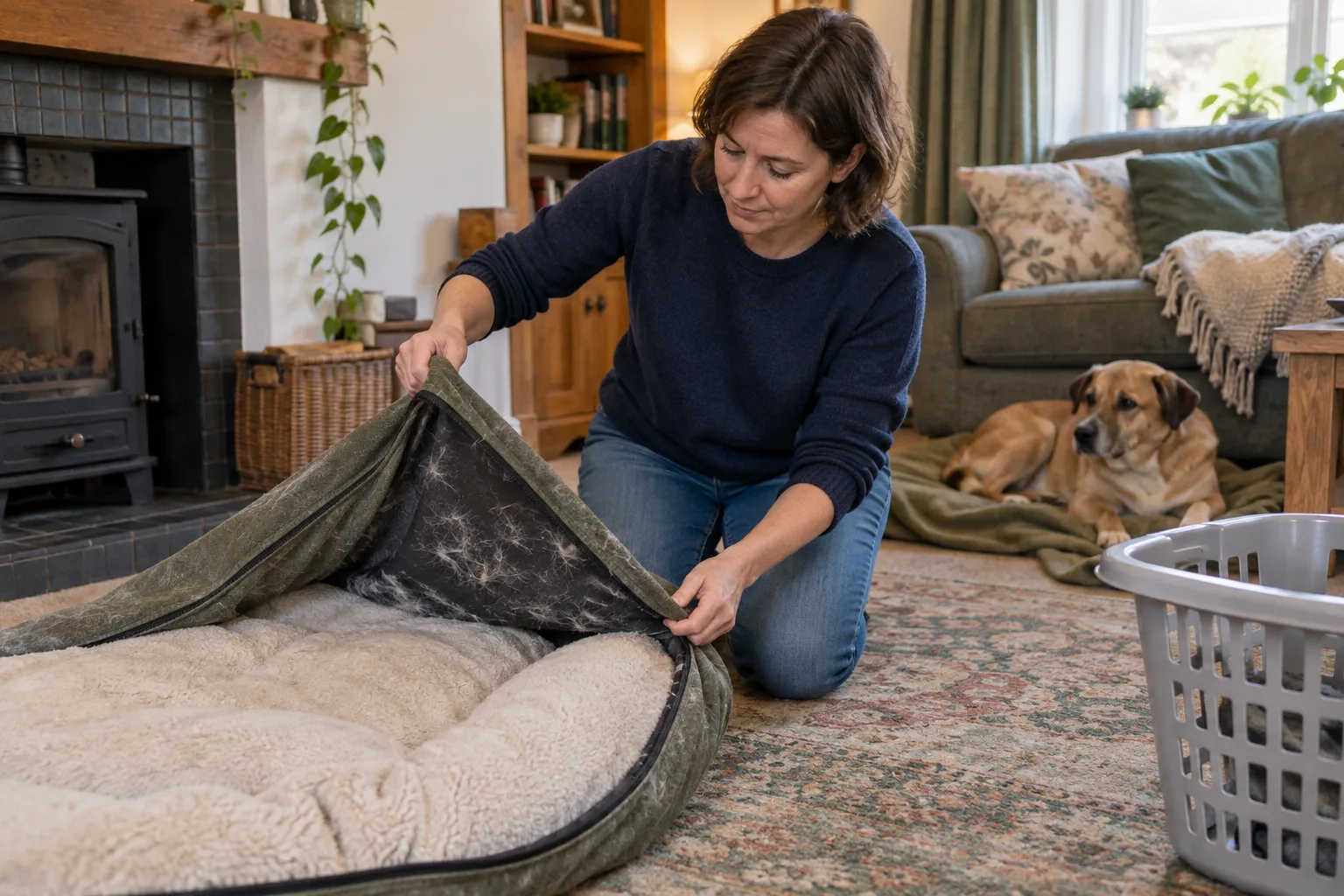
A removable, machine-washable cover is usually more manageable than a bulky bed that barely fits through the washer door. Check the care instructions for the filling as well as the cover: permission to wash one does not necessarily apply to both.
Remove hair first, then follow the stated wash temperature and drying instructions. Do not assume every dog bed needs, or can withstand, a hot wash. Overloading the drum restricts movement and can leave a bulky item poorly washed or rinsed.
Choose laundry detergent according to the textile and washing-machine instructions, measure it accurately and keep it out of your dog’s reach. Extra detergent is not extra hair removal. Let bedding dry completely, including seams and thick sections, before putting it back into use.
A washable throw over the dog’s preferred sofa spot makes the next clean smaller, provided it stays securely in place. Keep a spare so there is no bare-cushion interval while the first dries. Separating these throws from towels used after wet dog walks also keeps muddy walking kit distinct from indoor bedding.
Choose fabrics and gadgets with realistic expectations
Texture matters when choosing replacement covers. Raised pile and loose constructions give hair places to catch, while smooth surfaces are generally easier to wipe or brush. Check washability alongside appearance; an attractive cover that needs specialist cleaning may be an expensive choice for the dog’s daily seat.
Do not rely on a simple natural-versus-synthetic rule. Static can make hair cling to synthetic materials too. The practical question is how easily hair comes away from that particular surface, not just what the fibre label says.
Air purifiers are not substitutes for cleaning upholstery or carpets. A suitable filter can capture airborne particles that pass through it, but it cannot pull embedded fur out of your cushions. Nor does removing visible hair make a home allergen-free: pet allergens are not confined to the strands you can see.
Skip homemade fabric-conditioner sprays on dog-contact surfaces. They introduce product residues without physically removing the hair. For ordinary fur collection, begin with mechanical methods rather than adding fragrance or spraying the room.
Brush your dog appropriately and recognise skin changes
Regular grooming collects loose coat before it reaches furniture. PDSA advises choosing grooming equipment suited to your dog’s coat and making grooming a positive experience. A short, smooth coat and a long, dense coat need different handling; one brush is not suitable for every dog.
Ask a qualified groomer for help selecting tools and a practical routine. Use gentle pressure, avoid repeatedly working the same patch and stop if your dog shows discomfort or distress. Do not pull through tight mats or attempt to cut them out close to the skin.
Shedding is normal, but bald patches, redness, sores, persistent scratching or a sudden change in coat loss need veterinary advice. Contact your vet rather than trying supplements, extra bathing or more forceful brushing. Household cleaning can remove shed hair; it cannot establish why a dog’s skin or coat has changed.
Related: Your House Smells of Dog. The Sofa Is Keeping Evidence.
Why this matters
You do not need a cupboard full of specialist kit to make a hairy home more manageable. Start with the surface causing the most work, check its care instructions and use the right attachment or fabric-safe tool before adding water. A washable cover and a separate routine for wet walks and muddy paws make particular sense in a UK home where the same hallway handles coats, boots and the dog. Aim for easier upkeep, not a house with no evidence that a dog lives there.
Common questions
- How do I get dog hair off a sofa?
- Vacuum with an upholstery attachment, then use a crevice tool along seams. On suitable fabric, a lightly damp rubber glove can gather remaining hair into clumps. Check the care instructions and test a hidden area first.
- Should I remove dog hair before washing clothes?
- Yes, lift loose dog hair before putting clothes in the washing machine. Use a lint roller or a suitable fabric brush so less hair enters the appliance.
- Can I put hairy clothes in the tumble dryer?
- Only if the clothing care label and dryer instructions allow it. A brief unheated cycle can loosen hair from dry, tumble-safe items. Follow load limits and clean the lint filter afterwards.
- How do I get dog hair out of carpet?
- Use the vacuum setting and floorhead recommended for your carpet, making slow, overlapping passes. Clean edges with an appropriate attachment and check that the vacuum’s container, filters and brush bar are not obstructed.
- What temperature should I wash my dog's bed at?
- Use the temperature specified on the bed’s care label. Check the cover and filling separately, remove loose hair first and make sure the whole item dries completely before your dog uses it again.
- Will an air purifier remove dog hair from furniture?
- No, an air purifier cannot remove hair embedded in furniture. It can capture airborne particles that pass through a suitable filter, but upholstery still needs direct cleaning.
- When should I worry about my dog shedding?
- Contact your vet if shedding changes suddenly or comes with bald patches, redness, sores or persistent scratching. These signs need assessment rather than extra brushing or a household cleaning solution.
Sources
This article was written by The Muddy Truth using the sources listed above. Last updated 9 October 2026. It does not name or recommend brands; sponsorship appears only in clearly labelled panels.