House of Chaos
Your House Smells of Dog. The Sofa Is Keeping Evidence.
The route to a fresher home starts with the dog’s favourite sleeping spots, not another scented spray.
By The Muddy Truth Editorial Team
Published · 6 min read
Quick answerTo reduce dog smell at home, remove shed hair, wash bedding and throws according to their care labels, and dry everything thoroughly. Clean the places your dog uses most rather than covering odours with fragrance.
Not veterinary advice. General information only. We don't diagnose or treat. Never try home treatments for health problems. Always speak to a vet about symptoms.
You can have a clean kitchen, a reasonably civilised hallway and a sitting room that still announces DOG before anyone has spotted the dog. The culprit is often less dramatic than the smell suggests: a damp towel, a well-used bed or the sofa cushion that doubles as a chin rest.
The useful question is not how to make the house smell perfumed. It is where the smell is being stored. Soft furnishings collect hair, dirt and coat oils; damp laundry adds its own contribution. Tackling those sources is more useful than giving the room a quick blast of something called Summer Meadow.
Find where dog smells are collecting
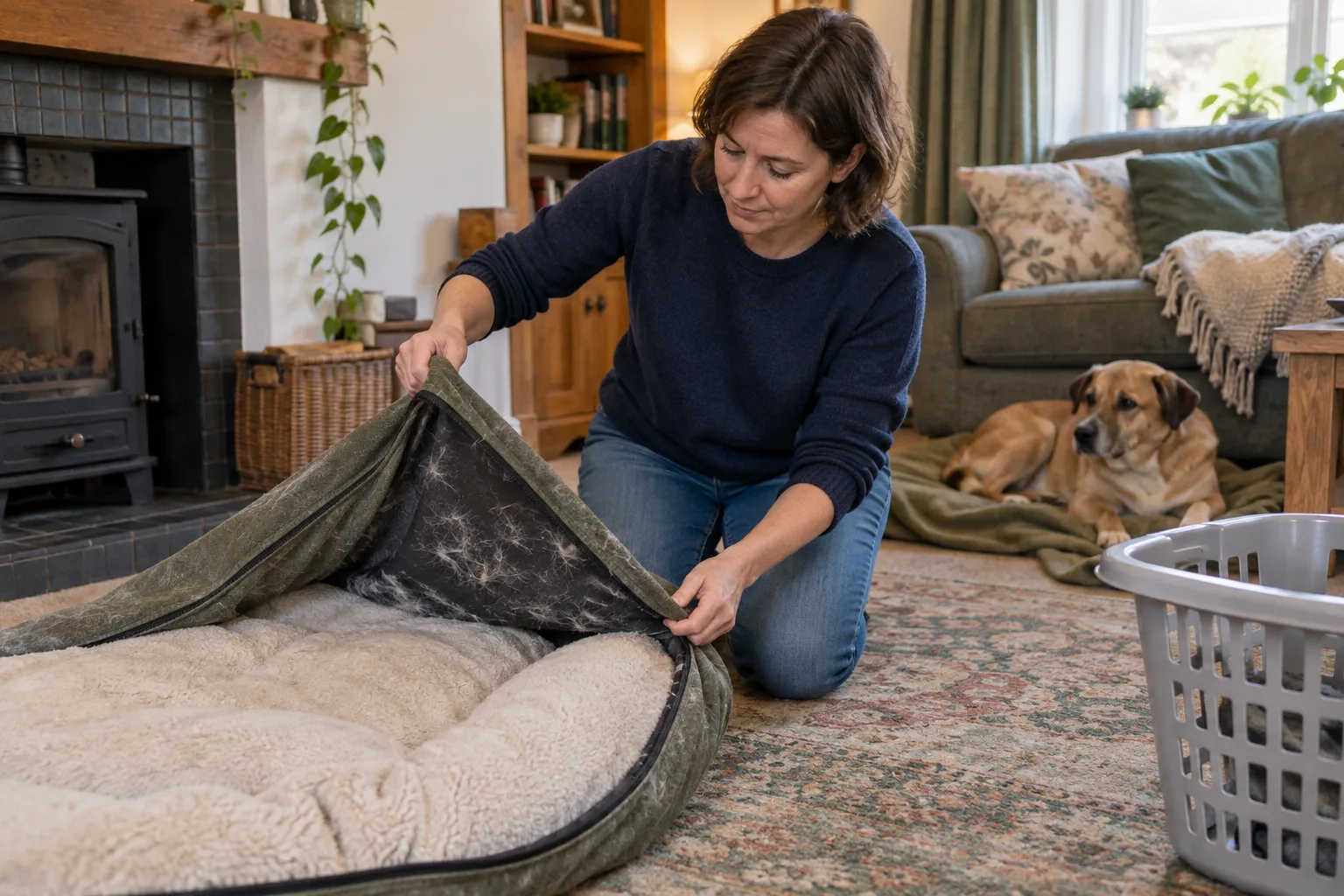
Start with the places your dog actually uses, rather than cleaning every room equally. Check the bed, favourite sofa corner, rug beside the radiator and pile of walking towels. Lift removable covers and inspect underneath: cleaning the top layer will not solve an odour held in the filling below.
Notice when the smell becomes strongest. After a wet walk, focus on damp coats, towels and bedding. If it is concentrated around the feeding area, inspect bowls, spilled food and the food bin. A room-by-room check helps separate several small sources from one particularly grubby item.
Give washable covers priority over difficult upholstery. A throw is much easier to launder than a sofa cushion, provided it covers the patch your dog occupies. There is little point protecting the decorative end while the dog marinates the other one.
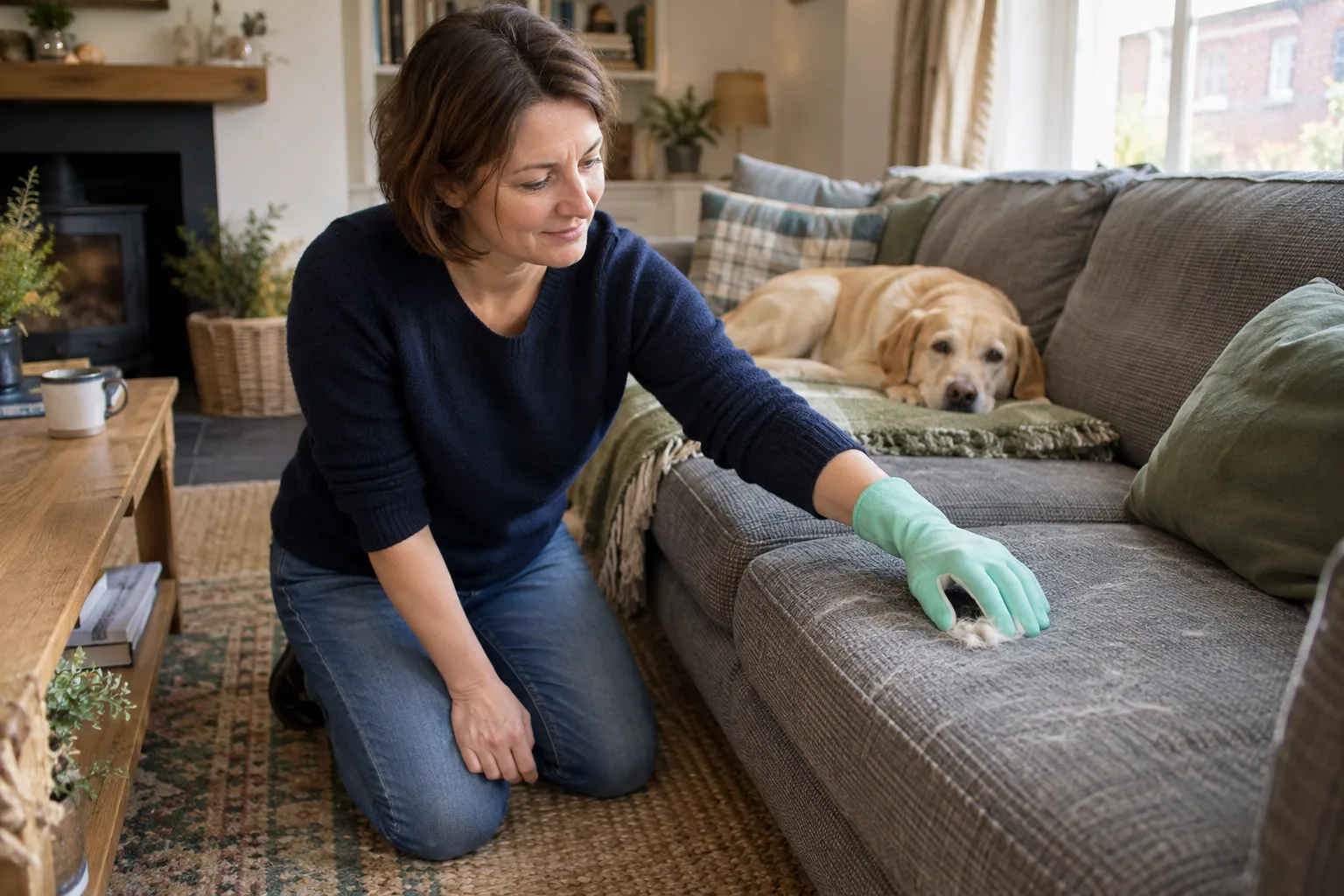
For the hair-covered surfaces you uncover, our guide to removing dog hair from sofas and fabrics explains how to tackle the loose layer before deeper cleaning.
Wash dog bedding without trapping damp
A weekly or fortnightly bedding wash is a useful starting routine, with extra washes when it becomes dirty or damp. That is a housekeeping guide, not a rule for every household: a dog returning from muddy walks creates a different laundry load from one spending most afternoons indoors.
Use this order to avoid turning a smelly bed into a damp, smelly bed:
- Read the care label. A washable cover does not necessarily mean the foam or filling can go in the machine.
- Remove loose hair first. Vacuum the surface or use a lint roller, then put collected hair in the bin rather than down a drain.
- Choose the permitted wash. Follow the label’s temperature limit and the detergent’s dosing instructions; a hotter cycle can damage some fabrics and fillings.
- Leave room in the drum. Do not force a bulky bed into a machine that cannot accommodate it properly.
- Dry every layer completely. Check seams, corners and thick filling before putting the bed back together.
A spare washable cover makes this easier, but it cannot compensate for a damp insert. Keep a separate, clean resting place available while bedding dries.
Apply the same label-led approach to sofa throws and washable soft toys. Inspect toys during cleaning and remove damaged ones from use, particularly if stuffing or small parts are coming loose.
Remove hair from carpets and upholstery
Loose fur is not just a visual nuisance. It carries material from the coat into the places it settles, which is why a carpet can look passable while still contributing to the room’s smell. Concentrate vacuuming around sleeping spots, along skirting boards and beneath furniture edges.
Once or twice a week is a reasonable starting point, with more frequent attention where hair builds up quickly. Multiple dogs and heavy shedding can change the workload considerably. Slow passes over a favourite resting patch are more useful than a hurried circuit that misses the edges.
Use the upholstery and crevice attachments your vacuum already has. Check its brush roll and empty its bin or replace its bag according to the instructions. A clogged machine is being asked to collect tomorrow’s hair while still wearing last Tuesday’s.
Embedded hair may need loosening before vacuuming. Check fabric-care instructions and test any method discreetly first; our practical dog-hair removal guide covers options for different household surfaces.
If a carpet still smells after loose debris is removed, check its care requirements before considering extraction cleaning. Avoid soaking carpets or upholstery: moisture reaching the backing or padding can be difficult to remove. Keep dogs away during cleaning and until the surface is fully dry and any product’s re-entry instructions have been met. Persistent contamination beneath a carpet may need professional assessment.
Check dog food, bowls and walking towels
The kitchen has its own odour sources. Close dry-food packaging securely and, if useful, keep the original bag inside a clean, lidded container. Retaining the packaging also keeps feeding instructions, expiry information and batch details available. Follow the storage instructions rather than assuming every food belongs in the same cupboard.
Wash feeding bowls between meals according to their care instructions and clear food caught underneath them. Follow pack directions for storing opened wet food and dealing with leftovers. Do not change meal sizes or your dog’s feeding schedule simply to reduce kitchen smells.
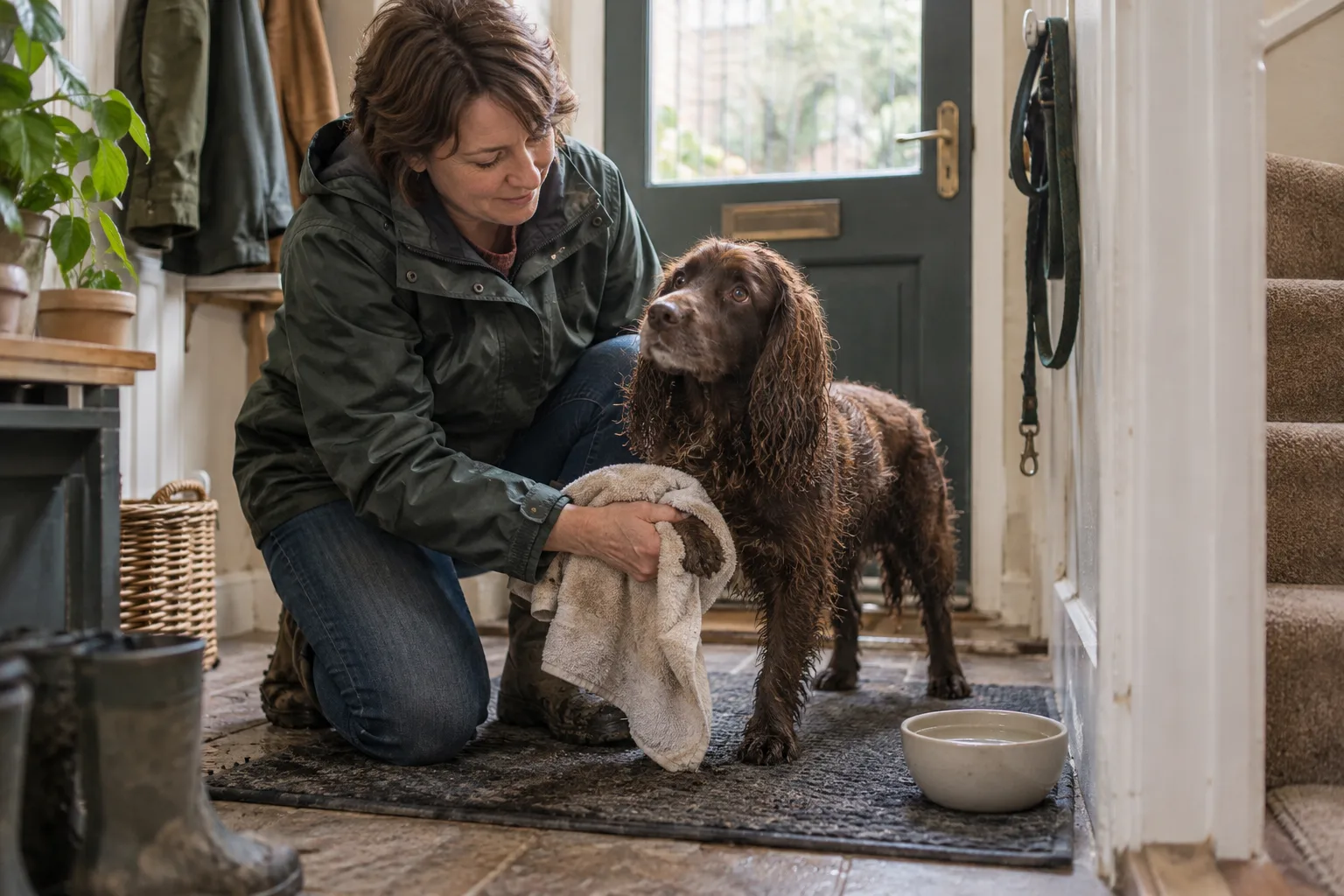
Walking towels deserve a proper drying space, not a heap behind the back door. Hang them spread out after use, wash when dirty and dry thoroughly before storing. A towel can feel dry at the exposed edge while remaining damp in a folded centre.
Check the container holding used poo bags, too. Remove waste promptly and keep storage secure and inaccessible to dogs; otherwise, you may be laundering the sofa while overlooking a much simpler source.
Reduce wet-dog mess at the door
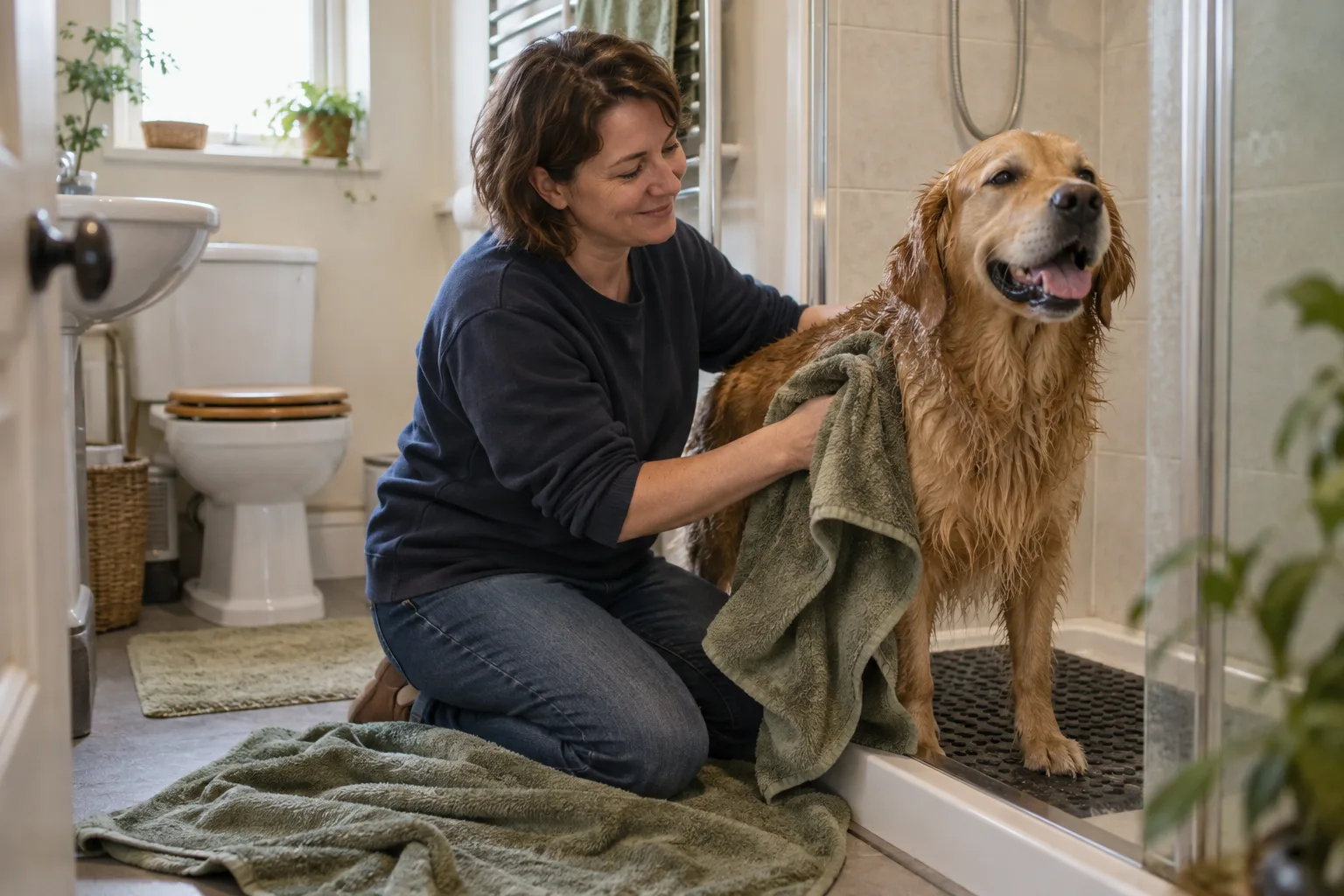
A towel and washable mat near the entrance make it easier to deal with wet paws before the dog reaches the furniture. Our guide to keeping wet-walk mud off the sofa sets out a practical doorway routine. The point is to intercept dirt, not turn every walk into bath night.
Regular brushing helps collect loose coat before it spreads through the house. The right frequency depends on coat type and grooming needs; a short, smooth coat and a long coat prone to tangling need different routines. Ask a groomer or vet if you are unsure which tools are appropriate.
PDSA advises that dogs generally do not need frequent bathing unless there is a medical reason. Washing too often can strip natural coat oils. For ordinary mud, rinsing with warm water may be enough; when shampoo is needed, use one intended for dogs rather than human shampoo.
If your dog has a skin condition, ask your vet about bathing and suitable products. Do not increase bathing to deal with persistent odour without checking whether there is an underlying health problem.
Ventilation helps, but cannot replace cleaning
Ventilate when weather and security allow, keeping windows and exits safe for your dog. Fresh air can help disperse airborne smells and support drying, but it cannot remove dirt from a bed or oils from upholstery.
An air purifier is an optional extra, not the first purchase. Particle filters capture airborne particles; activated carbon can adsorb some odour-causing gases. Performance depends on the filter, airflow and maintenance. Neither type reaches the damp towel behind the door.
Avoid using fragrance to judge cleanliness. Keep cleaning products away from dogs, follow labels and never mix cleaners. Do not apply household deodorising products or essential oils to your dog.
If the smell comes from your dog rather than the room, contact your vet about a new or persistent unusual odour, particularly alongside itching, redness, discharge, pain or changed behaviour. Sudden indoor toileting also warrants veterinary advice rather than simply a more intensive cleaning routine.
Related: How Often Should You Wash Your Dog? The Mud Gets a Vote.
Why this matters
For UK homes juggling wet walks and limited drying space, the practical priority is manageable laundry: washable layers, somewhere to dry towels and a clean spare resting spot. Start with the strongest-smelling area rather than buying several products for the whole house. A simple wet-walk doorway routine can reduce what reaches the furniture in the first place. The aim is a home that is easier to maintain, not a dog expected to emerge from every walk spotless.
Common questions
- how do I get rid of dog smell in my house?
- Remove the sources: shed hair, dirty bedding, damp towels and food residues. Wash suitable fabrics according to their care labels, dry them completely and vacuum the places your dog uses most.
- how often should I wash my dog's bed?
- Weekly or fortnightly is a useful starting routine, with extra washes when bedding gets dirty or damp. Follow the care label, check whether the filling is washable and dry every layer before reuse.
- why does my dog's bed still smell after washing?
- The filling may still be dirty or damp even when the cover is clean. Check beneath the cover and inside thick sections, following care instructions for washing and drying each part.
- does vacuuming help with dog smell?
- Yes, vacuuming removes shed hair carrying coat oils and dirt. Focus on resting spots, carpet edges and upholstery, and maintain the vacuum’s brush roll, bin and filters according to its instructions.
- will an air purifier get rid of dog smell?
- An air purifier with activated carbon may reduce some airborne odours, but it will not clean bedding or upholstery. Particle filters capture airborne particles rather than odour-causing gases.
- should I bath my dog more often if the house smells?
- Not automatically: check bedding, towels and furniture first. PDSA advises that dogs generally do not need frequent baths unless medically necessary. Contact your vet about a new or persistent unusual smell from your dog.
- should I remove dog hair before washing blankets?
- Yes, remove loose hair with a vacuum or lint roller before washing. This reduces the hair entering the machine; put collected fur in the bin rather than down a drain.
Sources
This article was written by The Muddy Truth using the sources listed above. Last updated 9 October 2026. It does not name or recommend brands; sponsorship appears only in clearly labelled panels.