Life With a Menace
How to Stop Your Dog Digging Up Your Entire Weekend
Your flowerbeds need boundaries, not a stern lecture: give your dog somewhere suitable to dig and teach them that the rest is off limits.
By The Muddy Truth Editorial Team
Published · 6 min read
Quick answerTo stop your dog digging up the garden, protect vulnerable areas, supervise outside and reward digging in a designated patch. Add suitable exercise and enrichment, and contact your vet if digging starts suddenly or comes with signs of distress.
Not veterinary advice. General information only. We don't diagnose or treat. Never try home treatments for health problems. Always speak to a vet about symptoms.
The garden was supposed to be somewhere to sit with a cup of tea. Your dog has instead submitted plans for extensive groundworks, starting with the border you planted on Sunday. The obvious question is how to stop the digging without spending every afternoon guarding a geranium.
The useful answer is less about banning digging altogether and more about deciding where it can happen. A dog cannot tell the difference between your carefully prepared planting bed and an excellent patch of loose earth. That distinction needs teaching, backed by some practical garden management.
Why dogs dig in the garden
Digging is a normal canine behaviour, not evidence that your dog has developed a personal objection to gardening. Some dogs enjoy the activity itself; others dig while investigating smells, seeking comfort or finding something to do.
Battersea’s behaviour guidance identifies several possible motivations, including boredom and calming down. It also notes that some breeds, including terriers, are particularly inclined to dig. Breed tendencies can help explain enthusiasm, but they do not tell you why an individual dog has chosen a particular spot.
Watch the circumstances rather than just counting holes. Does digging happen during long, unoccupied spells outside? Is it concentrated around one interesting smell? Does your dog head straight for freshly disturbed soil? A brief record of when and where it happens can help you choose a useful change.
Digging can also be associated with anxiety, stress or nesting in pregnant dogs. Those possibilities need a different response from ordinary play. Contact your vet about a sudden change, suspected pregnancy or signs of distress rather than assuming extra entertainment will resolve it.
Build a digging patch worth choosing
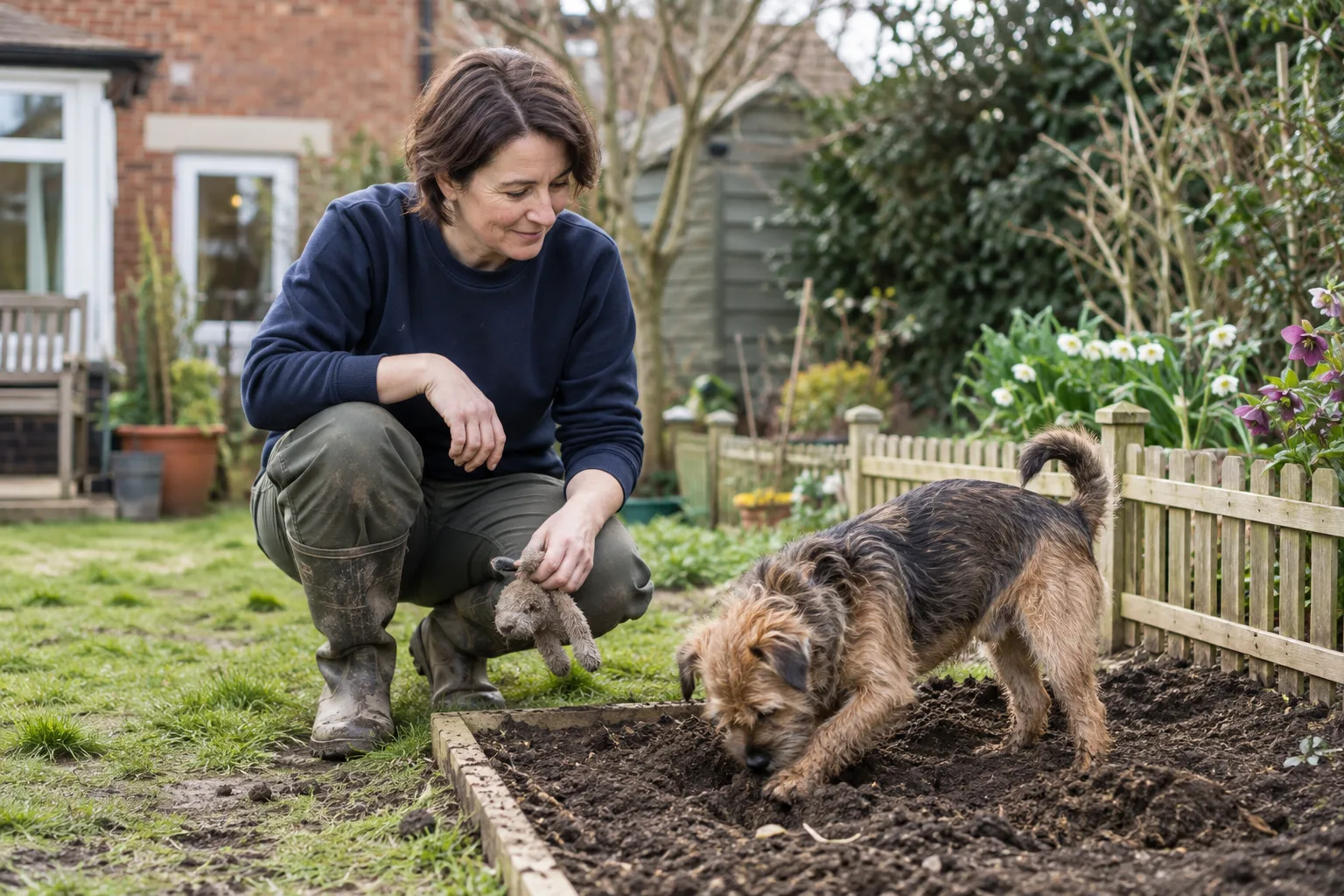
A permitted digging area gives you something to reward instead of an endless list of things to interrupt. It could be a clearly defined patch of suitable earth or a sturdy, shallow sandpit containing a little soil. Position it away from the flowerbed you are trying to protect.
Choose a location where you can supervise comfortably and where digging will not undermine a fence, expose cables or disturb planted bulbs. Check the material for sharp debris and keep it free of fertilisers, pesticides and other garden chemicals. Do not use compost containing food scraps.
Introduce the patch while your dog is already interested in exploring. Place a suitable toy on the surface, then partly conceal it in loose soil. Praise and reward your dog for investigating and digging there. Start with an easy discovery rather than burying something so thoroughly that they wander off.
Make the distinction consistent: this patch is available, the planted border is not. Keep introducing your dog to the permitted area; one successful afternoon does not establish a permanent garden rule.
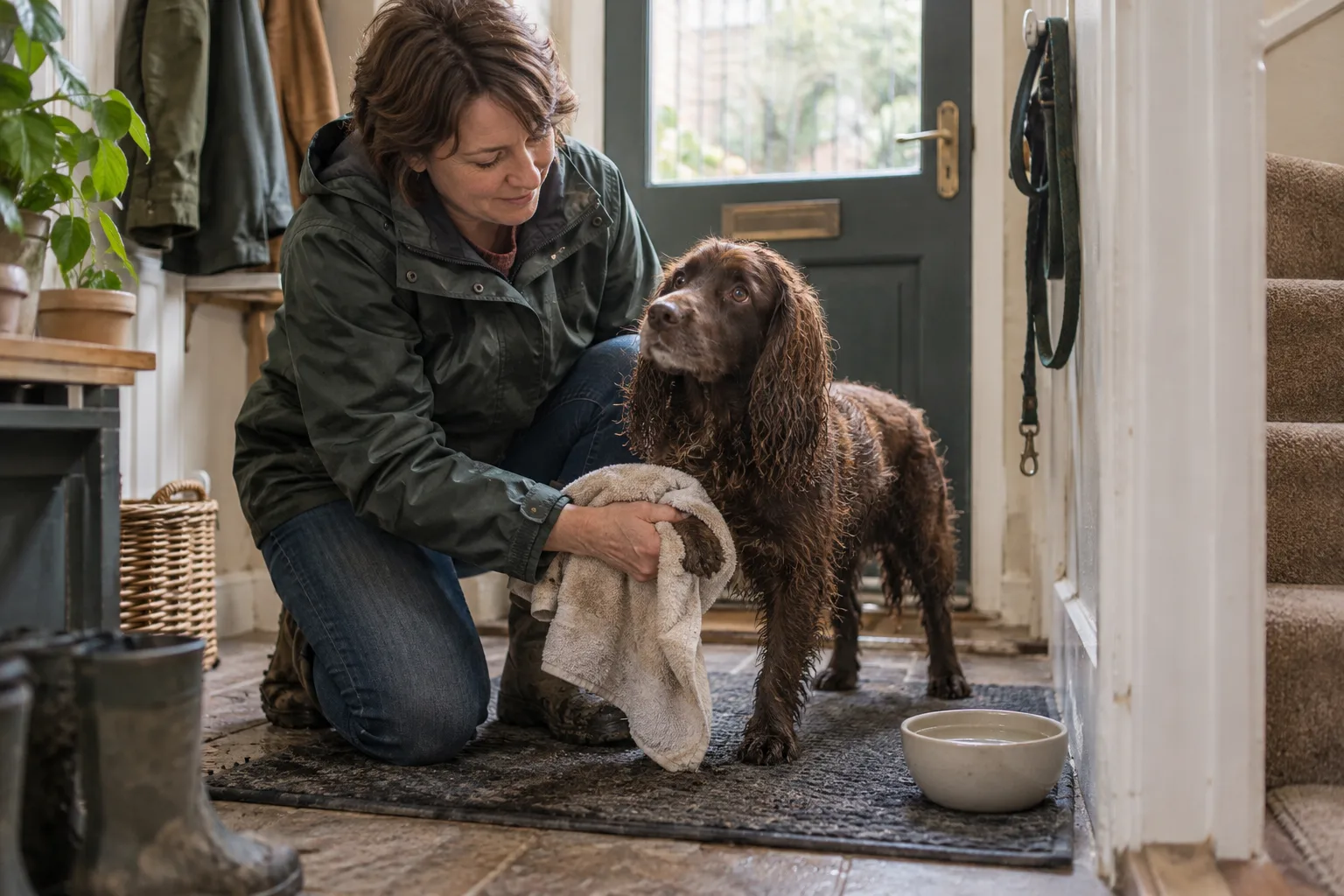
Think about the route back indoors, too. A towel beside the door makes more sense than discovering you need one after four muddy paws reach the landing. The same doorway routine that keeps walk mud off the sofa works after supervised garden digging.
Protect flowerbeds and supervise garden time
While the new habit develops, use secure barriers to restrict access to favourite excavation sites. Check that fencing has no sharp edges or gaps that could trap your dog. Loose netting is not a sensible substitute for a properly secured barrier.
If separation is impractical, go outside with your dog. Supervision means being available to intervene early, not spotting the completed crater through the kitchen window. Start with manageable garden sessions in which you can notice sniffing and pawing before a full digging session takes hold.
Where children share the garden, keep play and dog training carefully managed. An adult should actively supervise interactions, with secure separation when that is not possible. Our guide to safe supervision around dogs and children explains the distinction between being nearby and being able to prevent an unsafe interaction.
Battersea suggests a long-line lead as another management option. Use one attached to a well-fitting harness, keep it clear of furniture and planting, and supervise throughout. It is a way to guide movement, not a tether for leaving a dog outside. Avoid jerking the line or letting your dog charge to its end.
Teach cues before the digging starts
A recall is more useful when it already works away from the excitement of a freshly opened hole. Practise in an easy setting: call once, reward your dog for coming, then sometimes release them to explore again. Returning should not always mean the interesting part of life has finished.
A hand target offers another clear instruction. Present an open hand close to your dog’s nose and reward a voluntary nose touch. Build up gradually, adding a cue once the action is familiar. You can then use that movement to guide your dog towards the permitted digging area.
Timing matters. Redirect at the first interest in a forbidden patch when possible, then reward the alternative behaviour. If your dog is already digging, calmly call them away rather than shouting from across the lawn. Go closer if necessary and use your management arrangements to prevent immediate access again.
Teach “drop” separately by rewarding your dog for releasing a safe toy, offering a suitable reward in exchange. Do not turn stolen garden objects into a chase. If your dog may have swallowed something harmful, call your vet straight away; a trained cue cannot make an ingestion safe.
Give busy dogs more than garden access
Being outside is not automatically enriching. The same small lawn, with nobody to interact with and little to investigate, can become familiar quickly. Suitable walks, opportunities to sniff, short reward-based training sessions and play provide different outlets instead of expecting the garden to supply everything.
Battersea suggests food-search activities, including a snuffle mat or a cardboard box containing scrunched paper and hidden treats. Supervise these activities and remove them if your dog chews off or swallows material. Cardboard destruction is not suitable for every dog, particularly one that eats the pieces.
Use some of your dog’s normal food allowance for food-based activities where appropriate, rather than adding an uncounted stream of snacks. Keep challenges achievable: an activity that is too difficult may simply be abandoned. Rotate familiar options according to what your dog actually enjoys.
Plan for the indoor aftermath without turning every digging session into a bath. Remove ordinary surface mud with water and a towel as needed, and let damp towels dry fully before storing them. Wash muddy textiles according to their care labels. If the sitting room has acquired a lingering smell, dealing with odours held in sofa fabrics is a separate job from training the dog.
When digging needs veterinary advice
Contact your vet if digging appears suddenly, becomes unusually persistent or happens alongside signs of pain, skin irritation, restlessness or other behaviour changes. Describe when it occurs and any other changes you have noticed. A video can help if you can record safely without provoking the behaviour.
Digging at exit points, particularly when a dog is left alone, deserves attention to the wider circumstances. Do not assume it is boredom or punish the damage. A vet can assess possible health concerns and advise on appropriate behavioural support where needed.
Garden hazards require prompt action. If your dog may have eaten a toxic plant, bulb, chemical or another harmful substance, contact a vet or out-of-hours emergency vet straight away. Keep any packaging or plant identification available if safe to do so, and do not attempt home treatment.
Why this matters
A UK back garden often has several jobs: somewhere to grow things, dry washing, let children play and give the dog outdoor time. A designated digging patch makes those uses easier to reconcile without treating normal behaviour as misconduct. Start by protecting one vulnerable area and rewarding one clear alternative, then keep the rules consistent. Add a practical mud-control routine at the back door so permission to dig does not become permission to redecorate the hallway.
Common questions
- why does my dog keep digging up the garden?
- Dogs may dig for enjoyment, interesting smells, comfort or something to do. Some breeds are particularly inclined to dig, but stress can also play a part. Watch when it happens and contact your vet about sudden changes or distress.
- how do I stop my dog digging in flowerbeds?
- Restrict access with secure barriers, supervise garden time and redirect your dog to a designated digging patch. Reward use of that patch consistently rather than relying on shouting after a hole has appeared.
- how do I make a digging area for my dog?
- Set aside a clearly defined earth patch or sturdy, shallow sandpit containing suitable soil. Keep it away from fences, cables and planted bulbs, check for hazards, and encourage exploration with a partly concealed safe toy.
- should I tell my dog off for digging?
- Use calm redirection and reward an appropriate alternative rather than shouting or punishment. Digging is normal behaviour, so teach your dog where it is allowed and prevent access to areas you need to protect.
- can I use a long line to stop garden digging?
- A supervised long line can help you guide your dog away from unwanted digging areas. Attach it to a well-fitting harness, avoid obstacles and sudden stops, and never use it to leave your dog tethered outside.
- will enrichment stop my dog digging?
- Enrichment can help when digging is linked to a lack of suitable activity, but it will not address every cause. Combine sniffing, play and training with garden management, and seek veterinary advice if behaviour suggests distress.
- when should I worry about my dog digging?
- Contact your vet if digging starts suddenly, becomes unusually persistent or accompanies pain, skin irritation or other behaviour changes. If your dog may have swallowed something harmful while digging, call a vet or emergency vet straight away.
Sources
This article was written by The Muddy Truth using the sources listed above. Last updated 9 October 2026. It does not name or recommend brands; sponsorship appears only in clearly labelled panels.