Scrub-a-Dub Dog
How Often Should You Wash Your Dog? The Mud Gets a Vote.
A muddy belly needs attention, but a weekly shampoo appointment isn’t compulsory. Here’s how to judge bath time and make it less of a production.
By The Muddy Truth Editorial Team
Published · 6 min read
Quick answerFor dogs with healthy skin and coats, bathing is generally needed when they are dirty, rather than on a fixed timetable. Coat type, lifestyle and health affect their needs; dogs with skin conditions need a vet’s advice on washing.
Not veterinary advice. General information only. We don't diagnose or treat. Never try home treatments for health problems. Always speak to a vet about symptoms.
The dog has come home wearing half the footpath. Again. As you assess the brown legs and suspiciously crunchy belly, the question isn’t always how to get them clean. It’s whether this really requires another full bath, with towels occupying every available radiator afterwards.
For an otherwise healthy dog, cleanliness is a better guide than the calendar. A few muddy toes and a thorough roll in something unpleasant are different jobs. Separating those jobs helps you avoid unnecessary washing while still keeping the dog, and whatever they sit on next, reasonably clean.
How often does your dog need a bath?
There is no single bathing interval that suits every dog. Blue Cross advises that dogs with healthy skin and coats generally only need a bath when dirty. Their coat’s natural oils help maintain its condition, so a dog does not need shampooing simply because another Sunday has arrived.
Lifestyle changes the workload. A dog regularly splashing through muddy woodland will collect more dirt than one sticking to dry pavements. Coat type matters too: what stays on the surface of a short coat can become tangled into longer hair.
Judge the result of the walk rather than setting an automatic washing schedule. Is the dirt confined to the feet? Has it reached the belly? Is something unpleasant spread through the coat? The answer tells you how much cleaning is actually necessary.
A grooming appointment is a separate consideration. Brushing, trimming and coat maintenance may still be needed between baths; postponing shampoo does not mean abandoning the brush.
When bathing needs a vet’s advice
A new or persistent smell accompanied by redness, itching, soreness or other skin changes needs veterinary attention, not repeated washing. Contact your vet if you notice these signs. Bathing cannot establish what is causing them, and choosing a shampoo by its fragrance will not resolve that uncertainty.
For a dog with a diagnosed skin condition, ask the vet how washing should fit into their care. Any veterinary washing instructions take priority over general advice for healthy dogs. Do not choose a treatment shampoo or alter a prescribed routine yourself.
After surgery, wait for the vet’s permission before bathing. If your dog becomes dirty during recovery, contact the practice for guidance on cleaning them without compromising their wound or dressings.
Check the instructions for any spot-on parasite product before a bath, because washing restrictions vary. Ask your vet if the timing is unclear. Young puppies also need particular care because they can become chilled easily; seek advice rather than assuming an adult dog’s bathing routine is suitable.
Keeping dogs clean between full baths
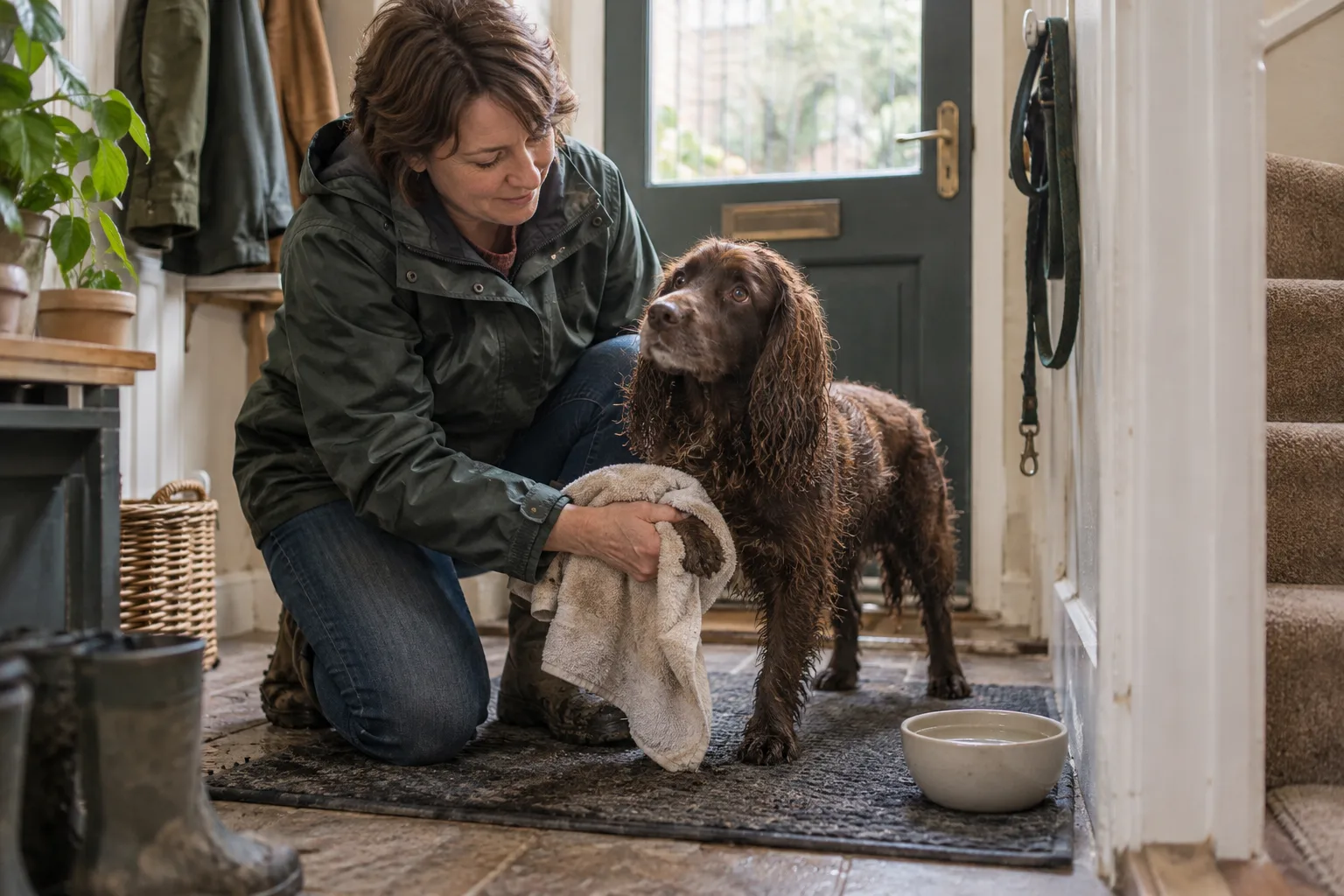
For ordinary mud on paws or the lower legs, use lukewarm water to clean the affected area and towel it dry. A dirty underside can likewise need local attention rather than a wash from nose to tail. Our wet-weather routine for keeping mud off the sofa helps organise that doorway stage.
Brush regularly with equipment suited to your dog’s coat. This removes loose hair and helps you notice tangles before they become harder to manage. Work gently rather than dragging a brush through resistance; seek professional advice for tight matting instead of trying to cut it away with scissors.
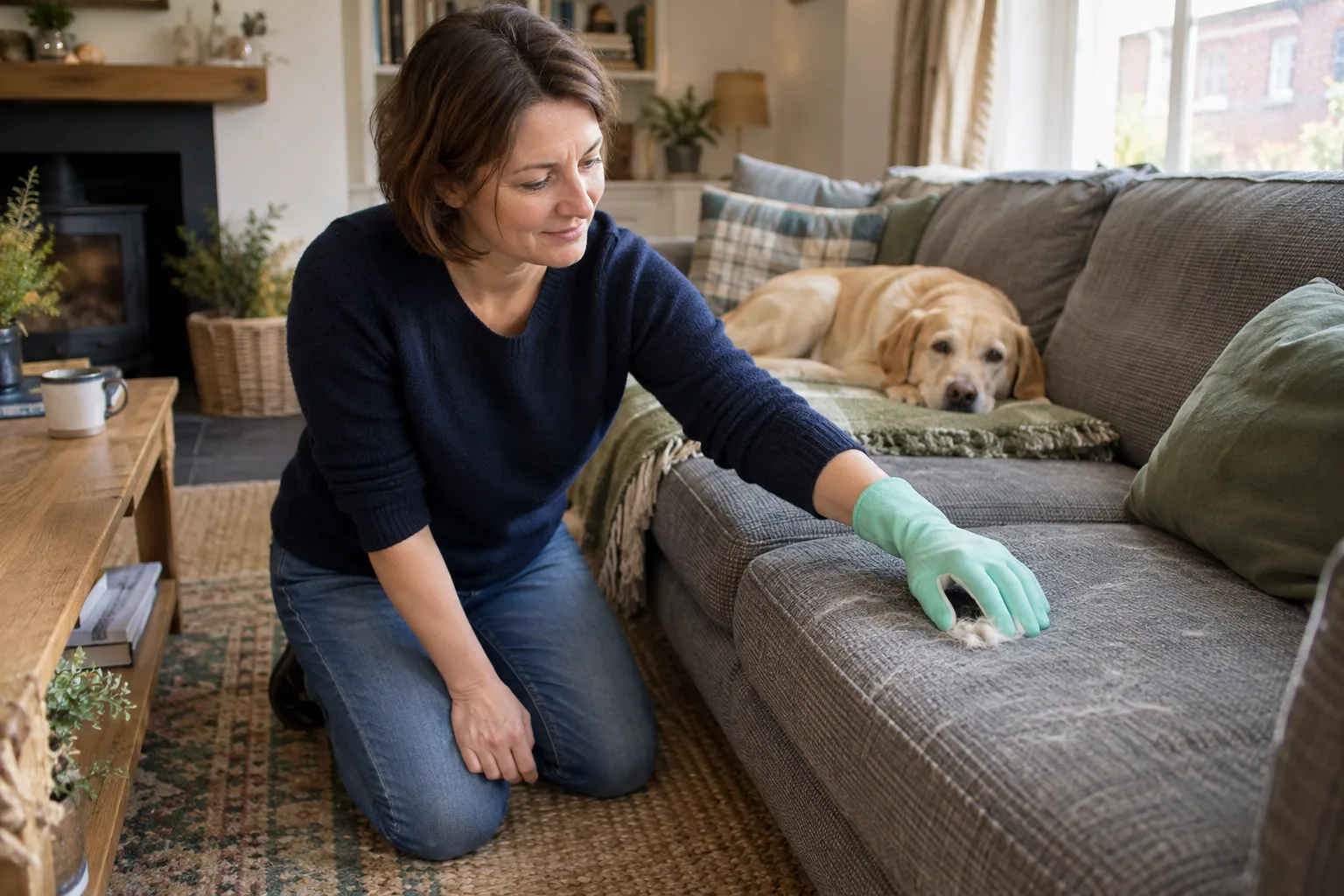
Loose hair around the house is not, by itself, a reason for another bath. Deal with the upholstery separately using a practical routine for removing dog hair.
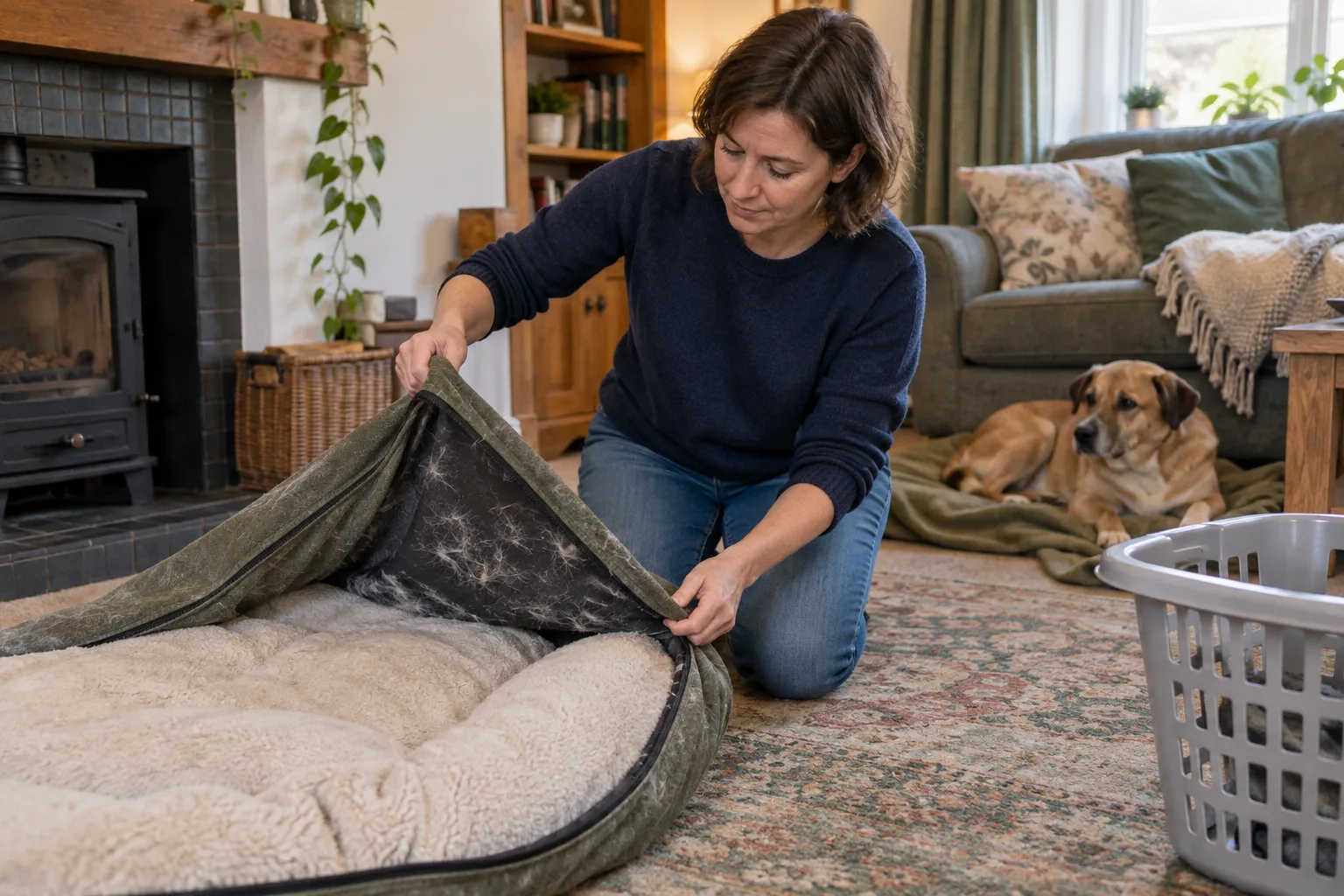
Check the bedding, too. A freshly cleaned dog returning to a grubby blanket does not keep the household fresh for long. Wash removable covers according to their care labels and dry them completely before putting them back.
Set up the bathroom before bringing the dog
Have towels, suitable dog shampoo and any rewards within reach before you begin. Read the shampoo directions first, including any dilution instructions. Use a product intended for dogs rather than improvising with human toiletries or household cleaning products.
Put a secure non-slip mat in the bath or shower. Good footing matters throughout washing and getting out; a wet, smooth surface is difficult for paws to grip. Keep the surrounding floor clear so you are not stepping over bottles while helping the dog.
Check how the dog will enter and leave. Do not attempt to lift a dog you cannot comfortably support. Arrange suitable help or use an accessible washing space. A heavy dog and a high-sided bath are not a problem to solve halfway through the rinse.
Gently brush manageable tangles out beforehand, and take off the collar or harness so you can reach the coat underneath. Keep the dog safely indoors while they are without it. Set aside enough uninterrupted time to finish rinsing and drying without rushing.
Help a worried dog accept washing
Bath-time preparation can happen without a bath taking place. Blue Cross recommends gradually introducing dogs to the washing space, using praise and treats to build a positive association before adding water.
Start with brief, calm visits to a dry, non-slip bath or shower area, with safe access. Reward relaxed behaviour and let the dog become comfortable there. Do not move straight to running water because one visit went well; progress according to the dog’s response.
Next, introduce the sound of the shower while keeping the spray away from them. Once they remain comfortable with that, try a little water on their paws. Keeping sound and touch as separate stages makes the experience less abrupt.
If your dog becomes frightened or struggles, stop rather than restraining them more firmly to finish. Another adult can help with practical handling, but extra hands should not be used to force a distressed dog through washing. Contact your vet about severe fear or a sudden change in their response to handling; pain or illness needs consideration.
Wash, rinse and dry without cutting corners
Test the water before it reaches the dog: it should feel lukewarm, not hot. Wet the coat gently, keeping the spray away from the face, eyes and ear openings. Apply the dog shampoo as directed, rather than assuming more lather means a better clean.
Pay attention to areas that are easy to skim past, such as beneath the collar, behind the ears and between the toes. Keep water out of the ear canals. Handle feet gently and contact a vet if touching any area appears painful.
Rinse thoroughly through the coat until the shampoo has gone and the water runs clear. Check underneath the body and through longer hair, where suds can be less obvious. A hurried final splash is not enough if shampoo remains next to the skin.
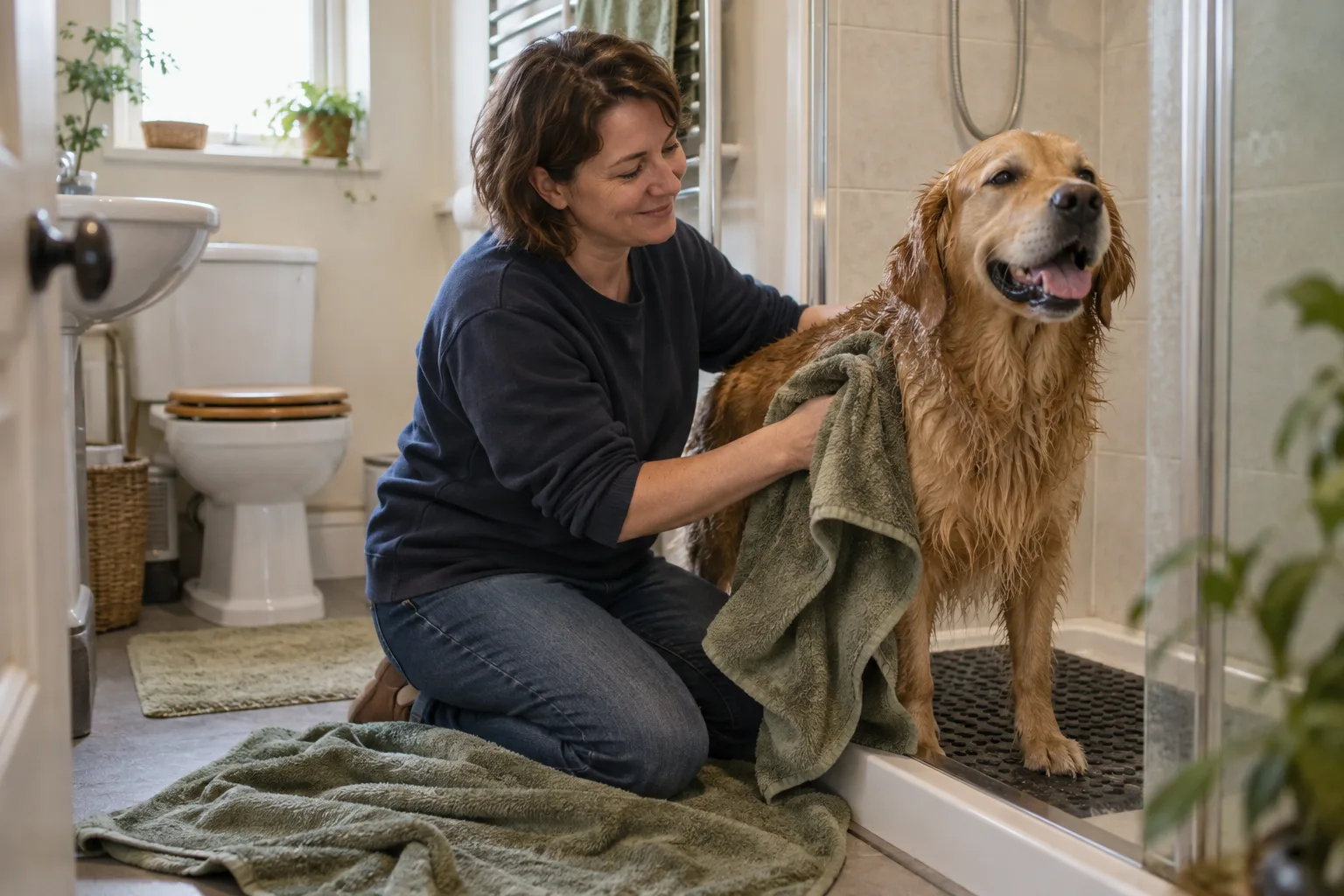
Towel the dog before helping them out, then continue drying somewhere warm and draught-free. Thick coats need attention below the surface; the outer hair feeling dry does not necessarily mean the undercoat is dry too.
If using a hairdryer, Blue Cross advises low heat and low speed, keeping it at least 15–20cm from the body and constantly moving. Check the temperature throughout. Stop if your dog appears worried, and continue with towels and natural drying in a suitably warm environment.
Finish by hanging wet towels out to dry or laundering them promptly. If the room still smells after the dog is clean, investigate the fabrics rather than reaching for shampoo again: our guide to dog smells trapped in sofas and household textiles explains where to look.
Why this matters
British walking weather can turn cleaning the dog into a daily chore, but it needn’t turn every walk into a full shampoo session. Keep a simple paw-cleaning setup by the door, reserve baths for dirt that actually warrants them, and make sure your dog has somewhere clean and dry to settle afterwards. When replacing bedding, choosing a dog bed with practical washing needs in mind can reduce the laundry burden. Persistent odour, itching or soreness calls for a vet, not a more ambitious bathing timetable.
Common questions
- how often should I wash my dog?
- A dog with healthy skin and a healthy coat generally needs bathing when dirty, not at a fixed weekly or monthly interval. Their coat, activities and health affect what is appropriate.
- does my dog need a bath after every muddy walk?
- No, local cleaning may be enough if ordinary mud is confined to the paws, legs or belly. Clean those areas with lukewarm water and towel them dry rather than automatically shampooing the whole dog.
- can I wash my dog with human shampoo?
- Use shampoo intended for dogs rather than human shampoo or household cleaning products. Follow its directions, including any dilution instructions, and ask your vet about washing products if your dog has a skin condition.
- can I bathe my dog after surgery?
- Wait until your vet gives permission before bathing your dog after surgery. If they get dirty during recovery, contact the veterinary practice for advice on cleaning them without affecting the wound or dressings.
- how do I wash a dog that is scared of baths?
- Introduce the washing space gradually, starting dry and rewarding calm behaviour before adding shower noise and then water on the paws. Stop if your dog becomes frightened; seek veterinary advice for severe fear or sudden changes in handling tolerance.
- can I use a hairdryer to dry my dog?
- You can use low heat and low speed if your dog is comfortable with it. Keep the dryer at least 15–20cm away, move it continuously and check the temperature. Stop if your dog appears worried.
- why does my dog still smell after a bath?
- Check whether the smell is coming from bedding or household fabrics rather than the dog. If your dog has a new or persistent smell with itching, redness or soreness, contact your vet instead of repeatedly bathing them.
Sources
This article was written by The Muddy Truth using the sources listed above. Last updated 9 October 2026. It does not name or recommend brands; sponsorship appears only in clearly labelled panels.