Life With a Menace
Choosing a Dog Bed: Your Sofa Would Like a Word
Size, location and laundry practicality matter more than matching the curtains. Here’s how to choose a dog bed that works in an actual dog-owning household.
By The Muddy Truth Editorial Team
Published · 6 min read
Quick answerChoose a dog bed with enough usable space for your dog to stretch out, comfortable padding and washable materials. Put it somewhere quiet and draught-free, and account for your dog’s mobility, sleeping preferences and need for undisturbed rest.
Not veterinary advice. General information only. We don't diagnose or treat. Never try home treatments for health problems. Always speak to a vet about symptoms.
Buying a dog bed can become an unexpectedly involved exercise in interior design. There are tasteful fabrics, upholstered sides and cushions that look smarter than anything the humans own. Unfortunately, coordinating with the rug tells you very little about how well it will work for the dog.
The useful question is not which bed looks most luxurious, but which one suits your dog and your home. That means looking beyond the photograph: at the space inside, where it will go, how it washes and how easily your dog can use it.
Choose the dog bed’s location before shopping
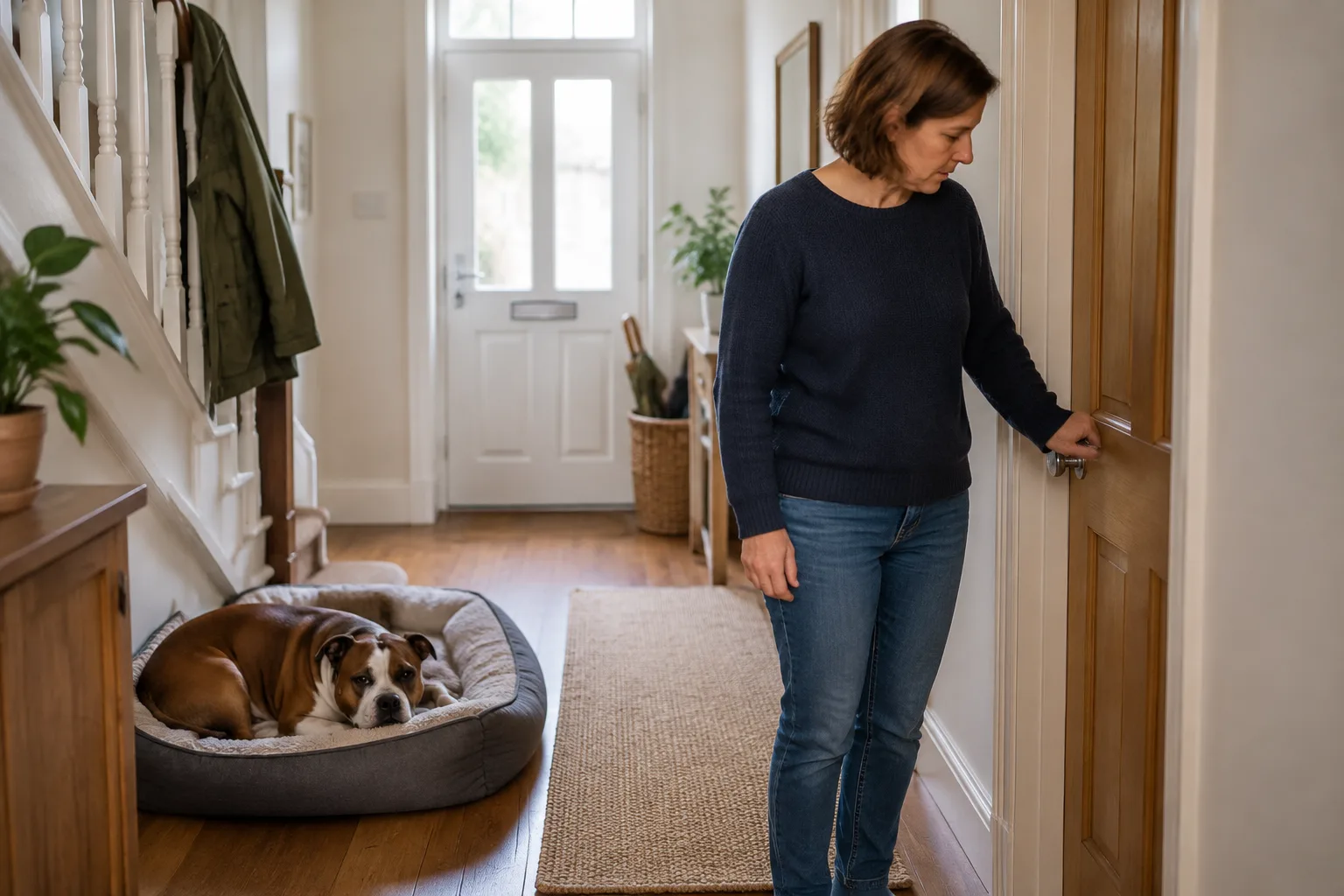
Start by finding a suitable resting place, then check what will fit there. The RSPCA recommends a warm position away from draughts, with opportunities for dogs to rest quietly or relax near their family. Those are different needs, so one location may not meet both.
A living-room corner can provide company without putting the dog directly in everyone’s path. A separate quiet spot offers somewhere to withdraw when the room becomes busy. Neither needs to be elaborate, but both need enough floor space for the bed and easy access.
Check the location during ordinary household activity. A seemingly peaceful gap beside the kitchen cupboards may become a thoroughfare during cooking. A utility room may be quiet until the washing machine starts spinning. Look at the room in use, not just when it is empty.
Also check doors, direct sunshine and nearby heat sources. A draught-free spot should not become uncomfortably hot. Keep routes out of the resting area clear, so the dog can move away freely rather than being boxed in by furniture or household clutter.
Measure sleeping space, not the dog bed’s label
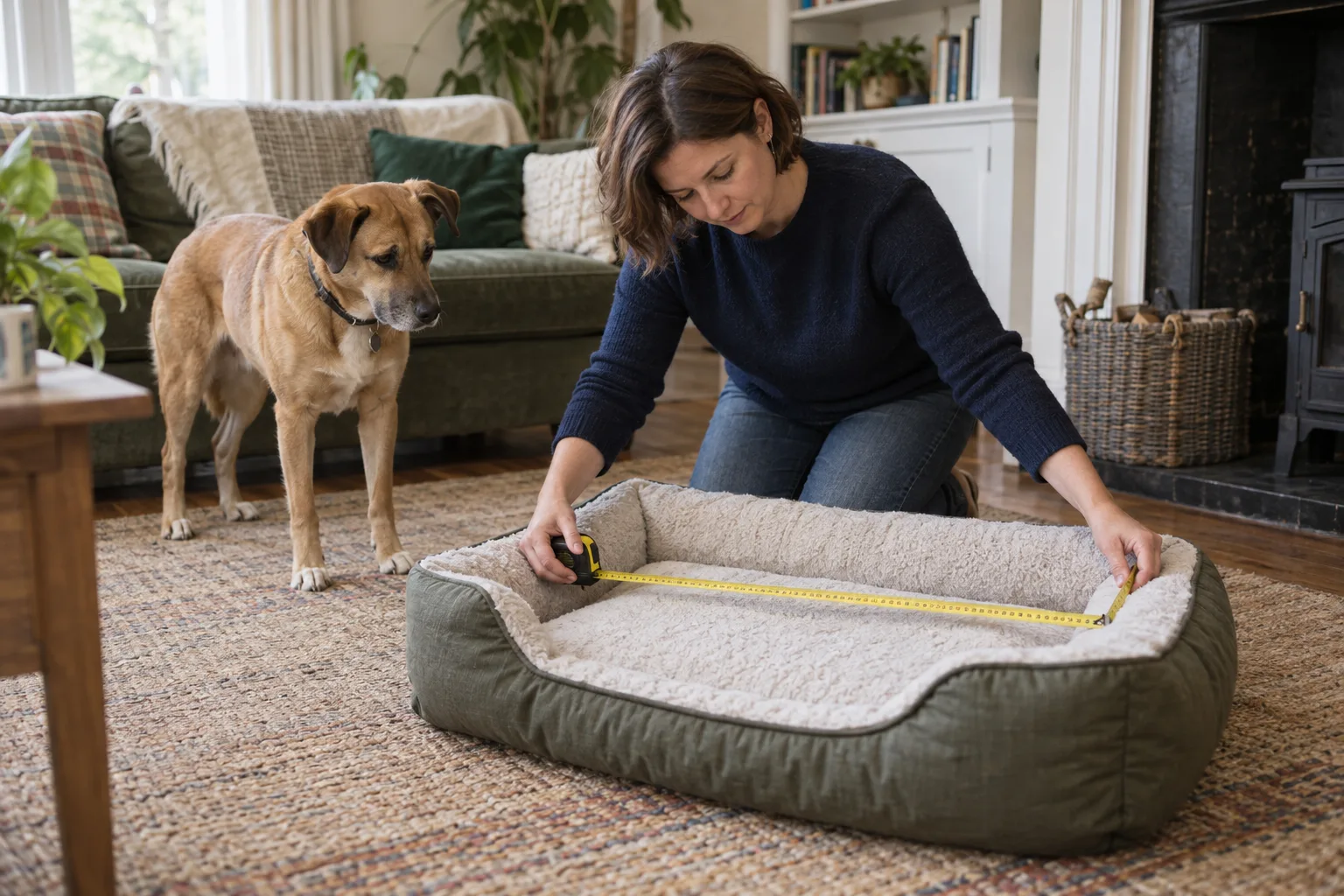
A size description such as medium or large is less useful than actual measurements. Check the bed’s external dimensions against your floor space, then look separately for the dimensions of the sleeping surface. Thick padded sides can occupy a substantial part of the footprint.
Observe your dog resting in several positions before choosing. A bed that accommodates a tightly curled dog may not allow the same dog to lie on their side with legs extended. The RSPCA advises choosing enough room for the dog’s range of natural sleeping positions.
Use a tape measure beside the dog while they are awake and relaxed, without disturbing their sleep. Note the space occupied when stretched out, rather than relying only on standing body length. If the listing gives no internal measurements, ask before ordering.
Shape matters alongside size. An open mattress leaves room for sprawling, while a bed with raised edges gives a curled-up sleeper something to nestle against. Neither shape is universally better, and a dog may use different styles at different times.
Before buying online, check the returns conditions and whether the cover, cushion and base are included. A photograph can make a generously furnished bed look like one item when some parts are sold separately.
Check how the whole dog bed washes
A washable cover is useful, but it is only part of the laundry story. Find out whether the inner cushion can also be cleaned, how the base should be treated and what drying method each component requires. Do this before the first muddy nap.
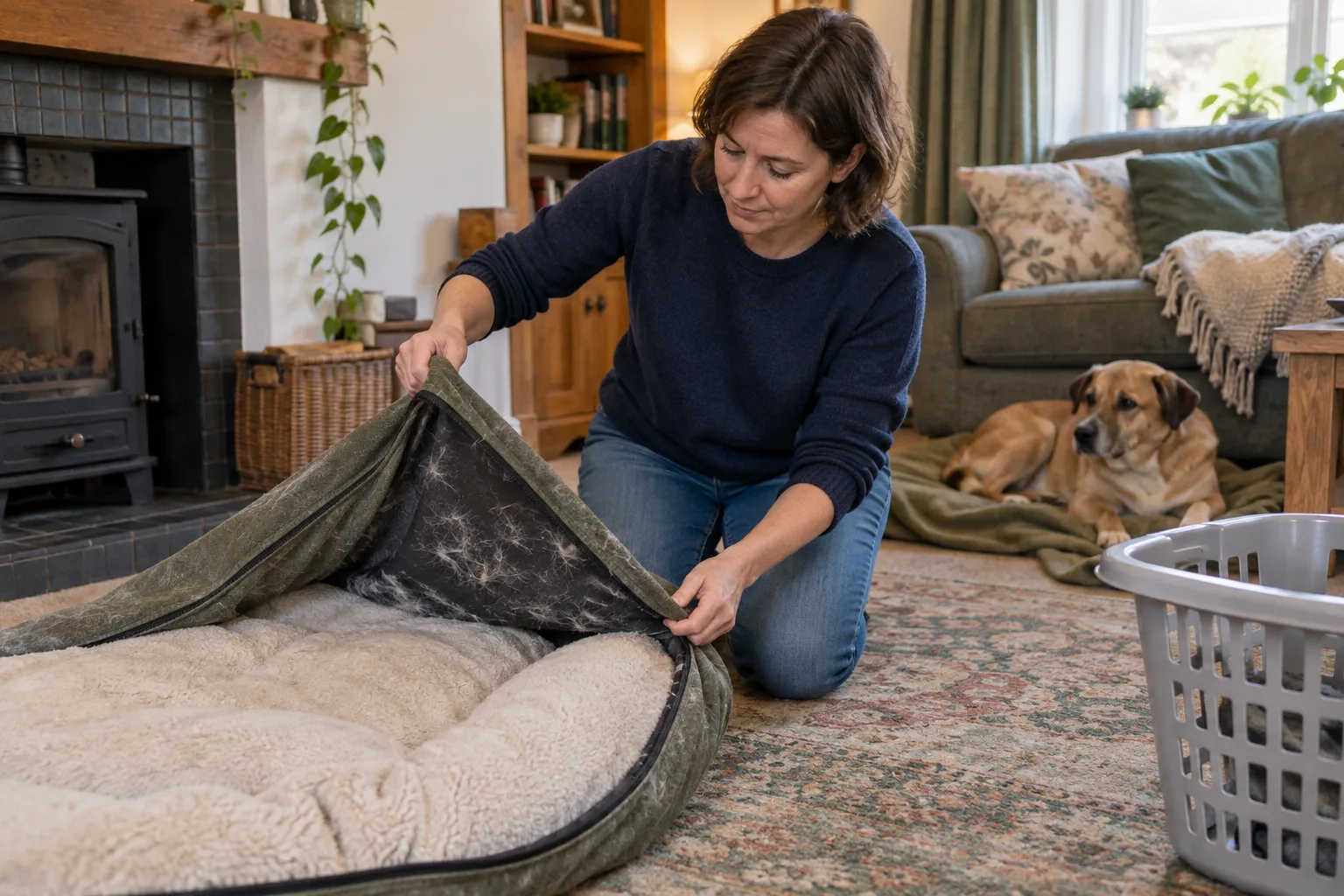
Read the care instructions for individual parts rather than assuming the entire bed can share a wash cycle. Some fillings cannot be machine washed; some covers need different handling from their inserts. A zip is not, by itself, permission to put everything in the drum.
Check capacity, too. A large cushion may exceed your machine’s limits or leave too little room to move during washing. Follow both the bed’s care label and the appliance instructions. A bed that requires facilities you cannot readily access may be impractical, however attractive it looks.
Remove loose hair before washing with a suitable vacuum attachment or fabric-safe hair-removal tool. Our guide to removing dog hair from upholstery covers useful approaches for fabric surfaces; check their suitability for your bed’s material first.
Make sure every washed component is fully dry before reassembling the bed. Thick padding can take longer than a cover, so plan where it will dry and provide another comfortable resting place meanwhile. A spare compatible cover can simplify laundry day, though it will not solve a wet inner cushion.
Match dog bed materials to everyday use
For camping, garden use or travelling, durability and moisture resistance deserve closer attention. The RSPCA identifies robust, water-resistant or waterproof materials as useful options for these settings. A bed intended mainly for a dry sitting room has a different job from one travelling in damp camping equipment.
Read what the moisture claim actually covers. Water-resistant does not mean waterproof, and a protected base does not necessarily mean the upper fabric or seams will keep the filling dry. Check the construction rather than treating the label as a guarantee against every puddle.
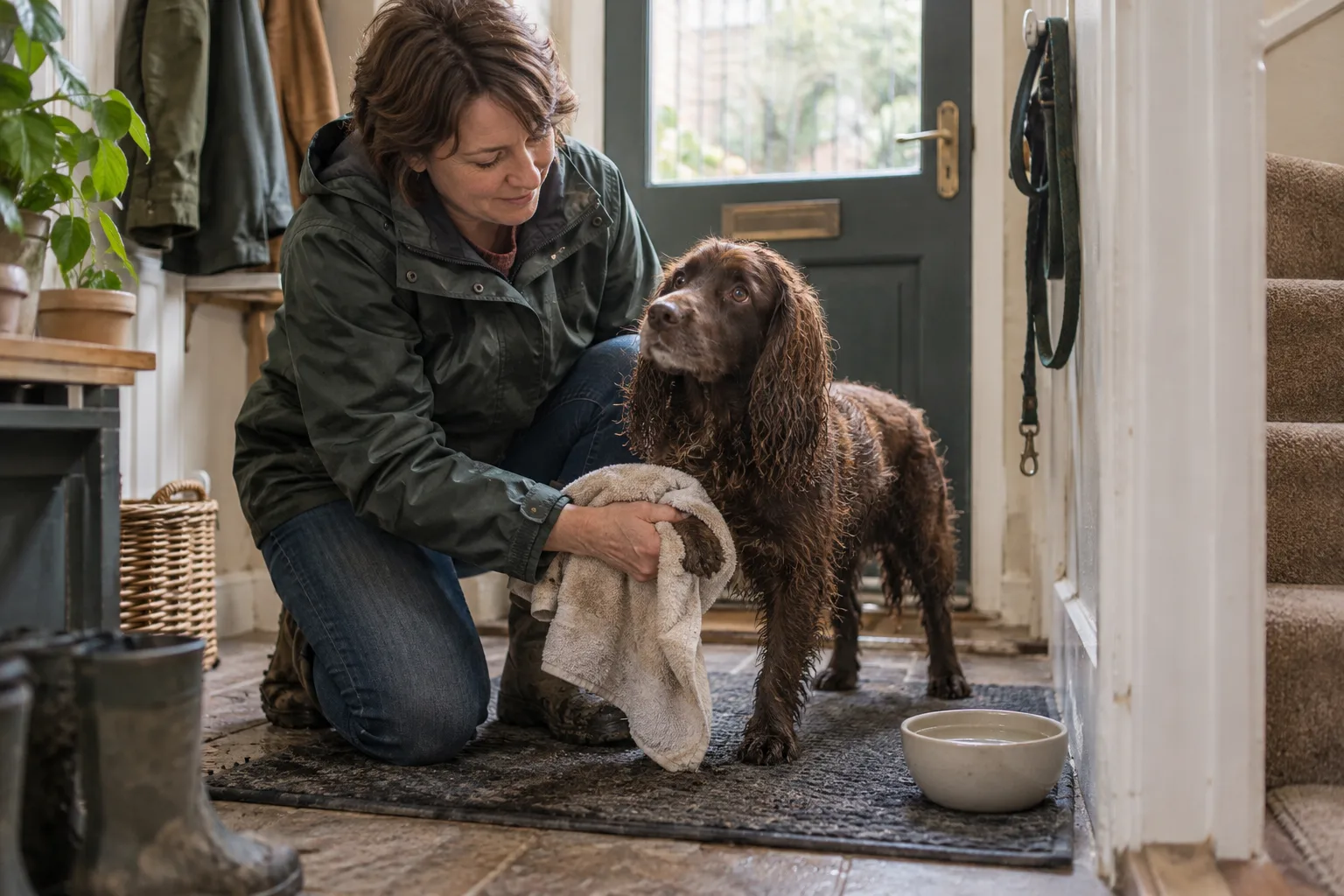
For indoor beds, reducing the amount of water and dirt arriving on them makes cleaning more manageable. A towel-and-doorway routine after wet and muddy dog walks can help, without turning every homecoming into a full bath.
Inspect the bed regularly for damaged seams, exposed filling or loose pieces. Remove damaged bedding if your dog could swallow parts. If you suspect they have swallowed fabric, stuffing or another component, contact a vet promptly.
Consider mobility and individual resting needs
For a dog with limited mobility, getting into the bed matters as much as lying on it. A low entrance can be easier to negotiate than a high padded wall. Check that the bed stays stable when the dog steps onto it, especially on smooth flooring.
The RSPCA says older dogs and dogs with joint problems may benefit from supportive orthopaedic or memory-foam beds that are easy to enter and leave. Those descriptions should not replace checking the bed’s actual construction or seeking veterinary advice about an individual dog’s needs.
If your dog is stiff, struggles to rise, appears painful or suddenly changes where or how they sleep, contact your vet. Do not assume a new bed will resolve the problem or that these changes are simply an inevitable part of ageing.
Some shy dogs may prefer an enclosed sleeping space, such as an igloo-style bed. Offer it as an option rather than placing the dog inside or blocking the entrance. The dog should remain free to enter, leave and choose another suitable resting place.
Make shared homes safe for sleeping dogs
In a multi-dog household, provide at least one bed per dog. The RSPCA recommends this to reduce competition over resting places. Dogs that enjoy sleeping together can also have an additional shared bed large enough for both, without losing their separate options.
Placement matters here as well: several beds crowded into one corner may offer little separation. Give each dog a route to a resting place without having to squeeze past another sleeping dog. Do not force dogs to share because they sometimes choose to cuddle together.
Everyone in the household should leave a resting dog alone. Children must not climb into the bed, hug the dog there or approach to take toys. Explain the rule to visitors as well as family members, and use physical separation when needed to protect rest.
A bed is not a substitute for safe supervision around dogs and children. If a dog growls when approached, stop the interaction, give them space and do not punish the warning. Seek veterinary advice about new behaviour or signs of discomfort, with qualified behavioural support where appropriate.
Why this matters
For UK households balancing limited floor space, wet walks and the washing pile, a useful dog bed is one you can position properly and maintain without a logistical crisis. Before spending, measure the sleeping area, read every care label and agree where the dog can rest undisturbed. If bedding is contributing to dog smells around the house, check the filling and drying routine as well as the cover. Changes in your dog’s comfort or behaviour need veterinary advice, not just a shopping decision.
Common questions
- How big should my dog's bed be?
- It should let your dog stretch out comfortably in their natural sleeping positions. Check the usable sleeping area, not just the overall measurements, because padded sides take up space.
- Where should I put my dog's bed?
- Choose a quiet, draught-free spot with easy access and room to move away. A second resting place near the family can give your dog a choice between company and quiet.
- Is a flat or raised-sided dog bed better?
- Neither is best for every dog. Flat mattresses allow sprawling, while raised sides can suit dogs that curl up. Watch how your dog rests, and consider offering different options.
- Can I put a whole dog bed in the washing machine?
- Only if its care instructions allow it and your machine can accommodate it safely. Covers, fillings and bases may need different cleaning methods, so check each component separately.
- What dog bed is best for an older dog?
- An easily accessible, stable bed with supportive padding may suit an older dog. Orthopaedic or memory-foam options may help some dogs, but stiffness, pain or difficulty rising require veterinary advice.
- Do two dogs need separate beds?
- Yes, provide at least one bed for each dog. If they enjoy resting together, you can add a larger shared bed while keeping their individual beds available.
- Should children stroke a dog in its bed?
- No, children should leave a resting dog undisturbed. They must not enter the bed or take items from it, and adults should use supervision and physical separation as needed.
Sources
This article was written by The Muddy Truth using the sources listed above. Last updated 9 October 2026. It does not name or recommend brands; sponsorship appears only in clearly labelled panels.